REVIEW · AM PHU CAVE TOURS
Da Nang : Marble Mountains, Monkey Mountain, and Am Phu Cave
Book on GetYourGuide →Operated by Vietnam Orange Tour · Bookable on GetYourGuide
Caves, pagodas, and Buddha statues in one run. This is a guided sweep that links Marble Mountains stonework, temple sites, and cave systems with a stop at Monkey Mountain’s famous Lady Buddha and its bonsai garden. I like how the tour feels organized without rushing the best photo spots.
Two things I especially enjoy: first, walking the Marble Mountains area where local artists make stone sculptures, so you’re not just sightseeing—you’re seeing how the place is shaped by craft. Second, Monkey Mountain adds a calmer, scenic reset: a giant Lady Buddha statue framed by mountains and a garden of bonsai. The only real drawback is the climbing—there are lots of steps, and it’s not a good fit for people who struggle with stairs.
In This Review
- Key highlights worth planning for
- Marble Mountains, Monkey Mountain, and Am Phu Cave: the overall vibe
- From pickup to Marble Mountains: why the first stretch matters
- Climbing Marble Mountains: steps, pagodas, and how to pace it
- Huyền Không, Tàng Chơn, and Âm Phủ Cave: what to expect inside
- Lunch in the middle: how it affects energy and pacing
- Monkey Mountain’s Lady Buddha and the bonsai garden: the calm contrast
- Price and value: what $25 gets you (and what it doesn’t)
- Who should book this tour?
- Practical tips I’d use before you go
- Should you book this tour?
- FAQ
- What locations does the tour pickup from?
- How long is the tour?
- What are the main stops during the tour?
- Is lunch included?
- What’s included in the price?
- Are elevator services included to help with the steps?
- How many steps are there at Marble Mountains?
- Does the tour run in bad weather?
- What should I bring and wear?
- Is the tour suitable for wheelchair users or people with medical conditions?
Key highlights worth planning for
- Stone-sculpture factories near Marble Mountains: you see local workmanship in context, not just finished souvenirs.
- Stair climb math (146 + 136 steps): plan your pace early, especially if you’ll reach the cave system.
- Pagodas from the 19th century: temple stops are part of the climb, not tacked on at the end.
- Am Phu Cave for big cave photos: a highlight cave name you’ll remember.
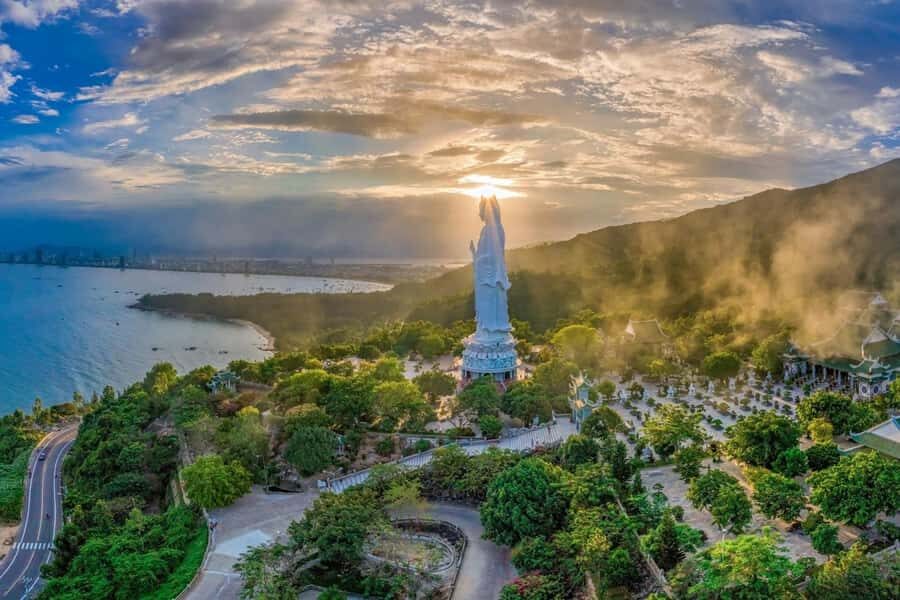
- Lady Buddha on Monkey Mountain plus bonsai garden: strong photo backdrop, airy walking paths.
- English guide and van transport: you spend energy on the sights, not on figuring out how to get between them.
Marble Mountains, Monkey Mountain, and Am Phu Cave: the overall vibe
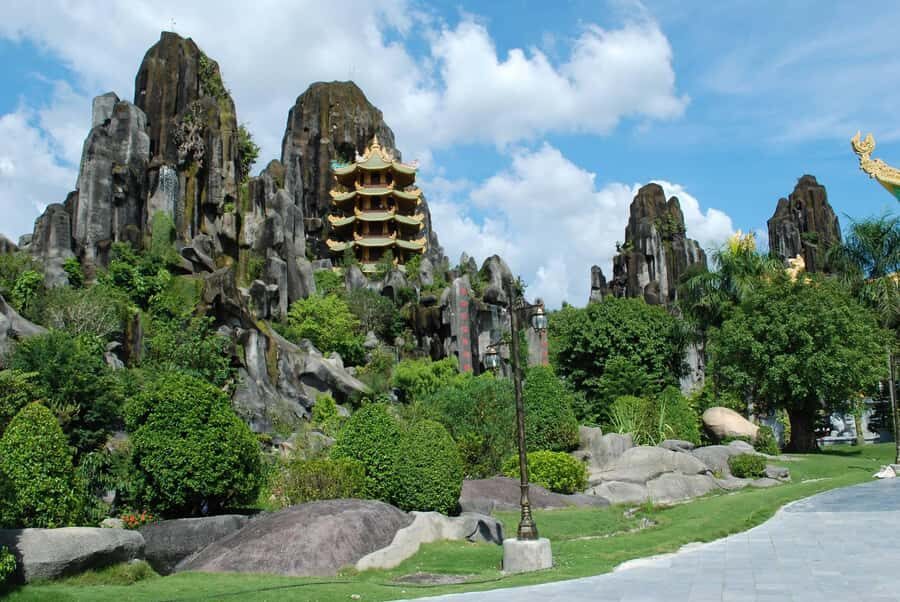
This tour from Da Nang (or nearby Hoi An) works because it groups three very different-feeling places in one half-day. You start with the Marble Mountains area, where the site’s caves and pagodas climb upward in stages. Then you shift to Monkey Mountain, where the big visual is the Lady Buddha statue and the surrounding garden setting.
For me, the key value is the flow. You don’t just jump between “attractions.” You get a guided route that explains what you’re seeing—especially around Buddhism themes—and then you get time to look, walk, and photograph what’s in front of you.
Also: the tour is designed to be simple logistically. Hotel pickup/drop-off and van transport reduce the stress of getting around Da Nang and the outlying sites. You’re paying for convenience and a guide who can keep the route moving.
You can also read our reviews of more tours and experiences in Da Nang.
From pickup to Marble Mountains: why the first stretch matters
You’ll get hotel pickup from a set of locations, including Hội An, Ngũ Hành Sơn, Sơn Trà, Điện Dương, and Da Nang. Pickup is optional based on where your hotel is (Hoi An city center, excluding South Hoi An area, and Da Nang Beachside). Once you’re in the van, there’s a short ride before you reach the Marble Mountains area.
The first big stop gives you about 2 hours at Marble Mountains, and that time matters. It’s long enough to walk the site, check out the caves and pagodas, and still pause for photos without feeling like you’re sprinting the whole time.
This is also where you’ll see local stone-sculpture work nearby. The tour includes a walk along the site to spot those local factories, which is a small detail that makes a big difference. If you’ve ever bought a marble souvenir and wondered how it’s made, you’ll get that context right away.
Climbing Marble Mountains: steps, pagodas, and how to pace it
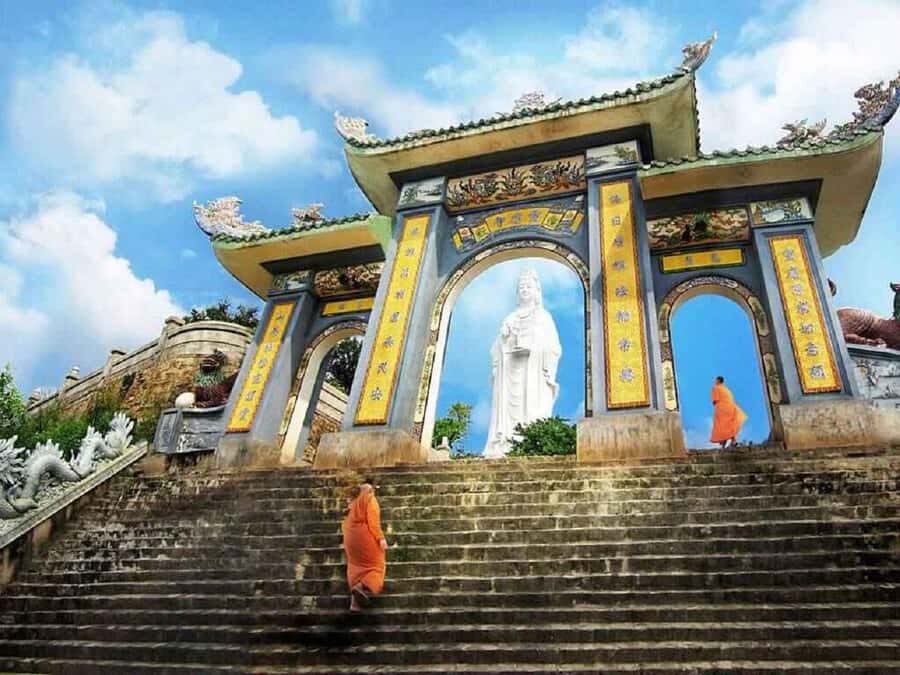
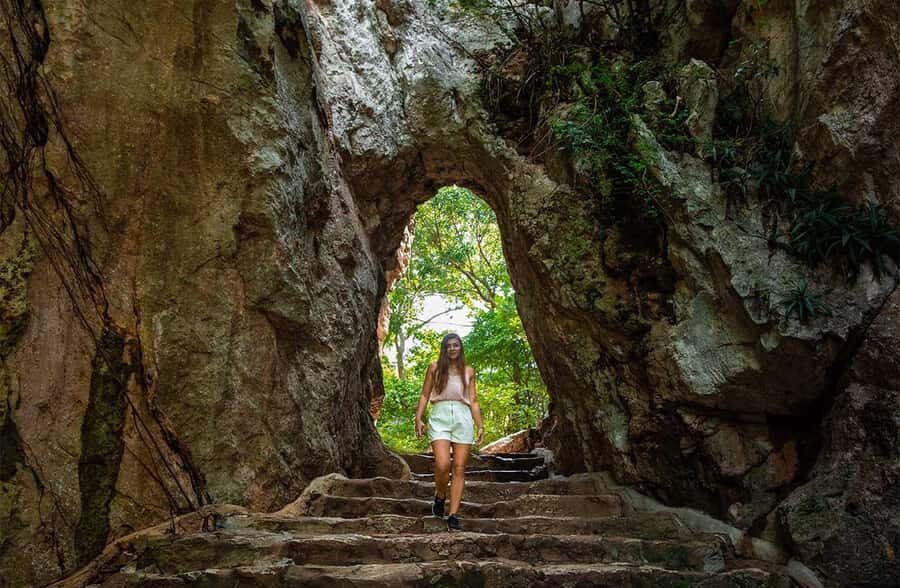
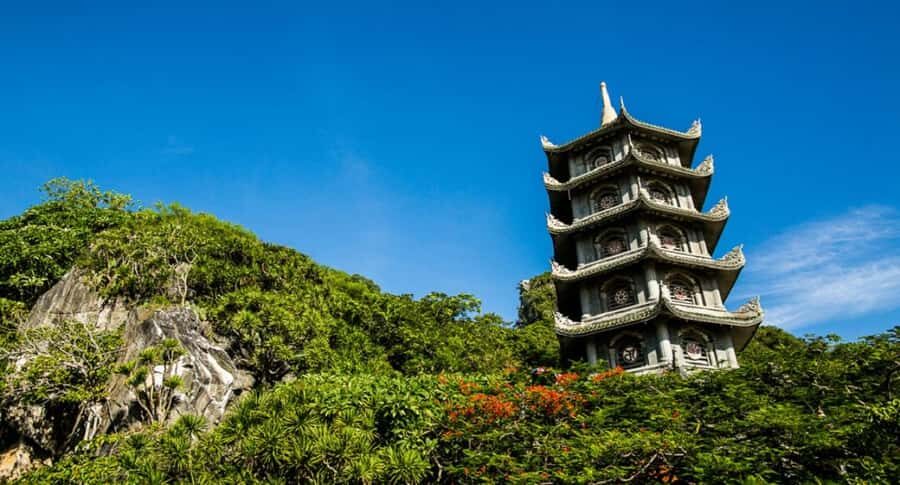
Here’s the practical reality: the Marble Mountains climb has real stairs. The tour notes 146 steps from the foot of Marble Mountain to the first stop (Xa Loi Tower), then another 136 steps up to reach the cave system.
You do have options:
- There’s an elevator you can use for the first 146 steps, but it’s at your own expense.
- The tour does not include an elevator service to the top.
- The elevator is optional, and you can still choose your pace.
If you want a calmer experience, I’d plan to use the elevator for the first stretch if you’re not sure you’ll feel great after Day 1 of travel. Once you’re committed to a long staircase, the rest of the climb can feel slower than you expect.
During the climb, you’ll pass beautiful pagodas. The tour highlights that these were made in the 19th century by the last dynasty of the Vietnam monarchy. Even if you don’t want to read a lot of plaques, the guided explanation helps you notice how the architecture and cave layout connect to the religious purpose of the site.
You should wear comfortable shoes. This is not a flip-flops tour, even if you’re quick. And because the tour runs rain or shine, you’ll want shoes that grip.
Huyền Không, Tàng Chơn, and Âm Phủ Cave: what to expect inside
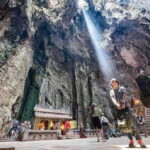
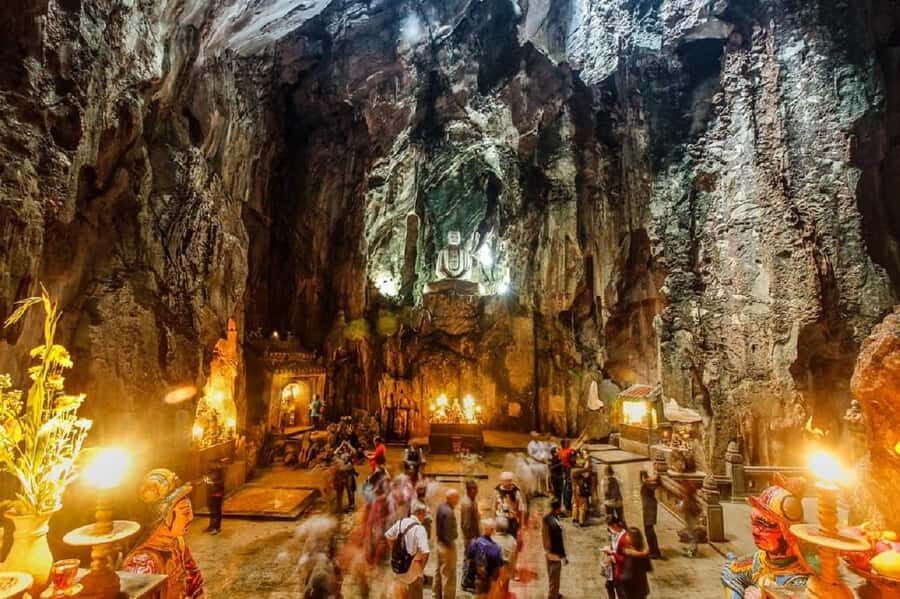
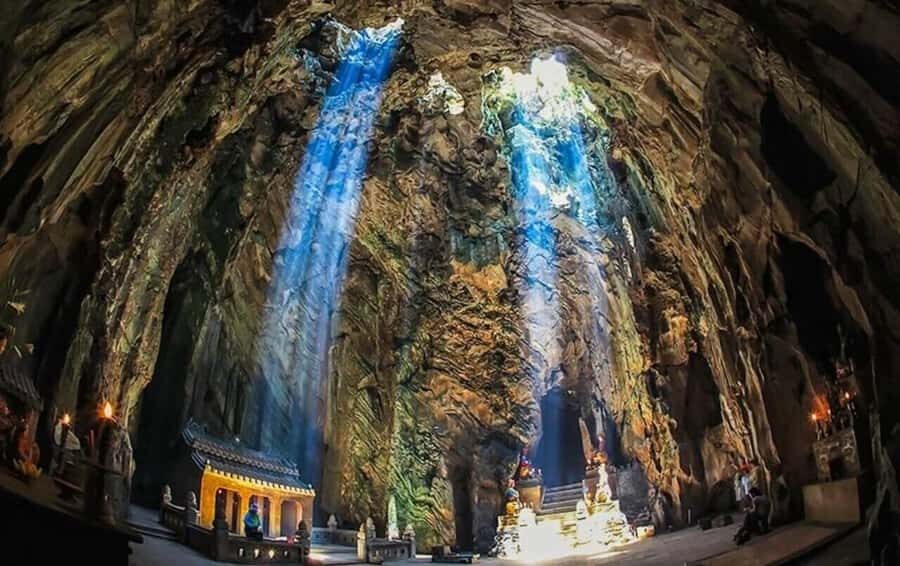
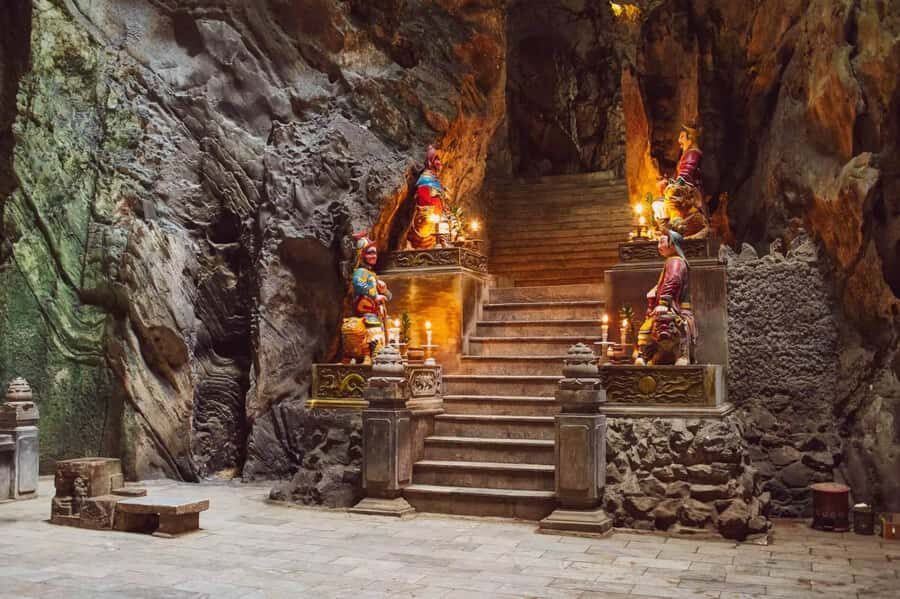
One reason Marble Mountains is such a good stop is that it’s not “one cave.” It’s a sequence. After the pagoda portion, the tour specifically takes you to the Huyền Không Cave (also referenced as Tàng Chơn Cave in the tour info) and then continues to the biggest cave: Âm Phủ Cave.
What that means for your time on site is that you’re moving from view-to-view, then into darker cave interiors, then back out for the next photo moment. It’s a pattern that keeps the experience from feeling repetitive.
For photography, the caves are where you’ll want to slow down. You can get good shots, but the light can be tricky and the surfaces can be slippery. A guide can help you time your camera moments so you’re not blocking foot traffic or standing in the wrong spot.
And for something deeper than photos, the tour includes Buddhism-themed learning. The guide explains philosophies tied to the cave area and encourages you to take photos of the natural creations. That combination—walking the physical space and understanding the symbolism—makes it more than a scenic detour.
Lunch in the middle: how it affects energy and pacing
Lunch is included if you select the shared morning tour. The tour uses a local restaurant with authentic Vietnamese cuisine, which is exactly what you hope for on a half-day: real food you don’t have to hunt down.
If you’re traveling with limited time, I like having lunch handled. It protects your energy for the second big visual stop at Monkey Mountain. Without a meal break, the Lady Buddha garden portion can feel like an extra marathon.
Since the tour duration is 4–5 hours, the “when” of lunch can be tight. Plan around it by bringing water and keeping snacks minimal if you’re unsure about stomach sensitivity. The best approach is to treat the day as a walking and climbing session, not a casual stroll.




Monkey Mountain’s Lady Buddha and the bonsai garden: the calm contrast
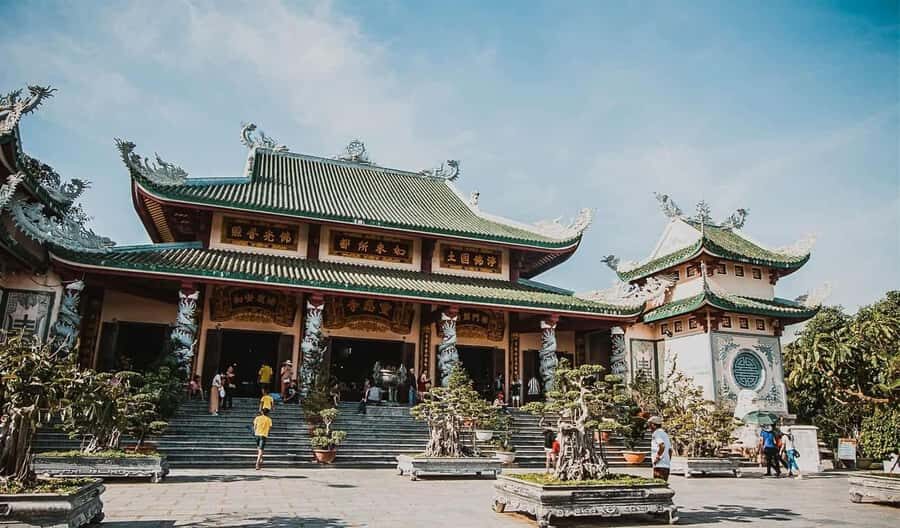
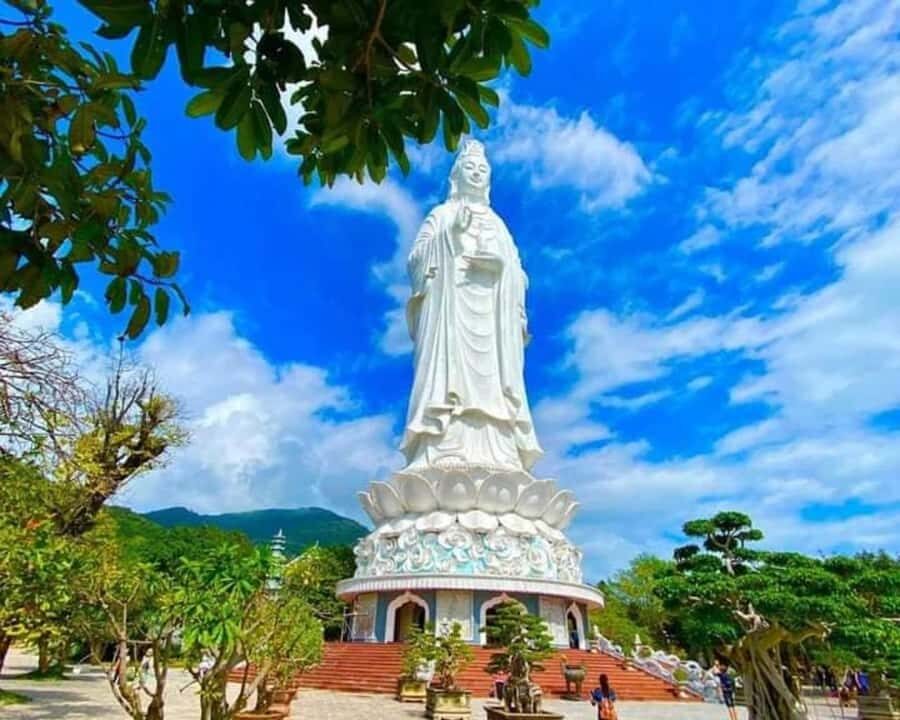
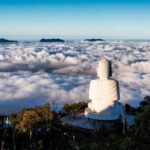
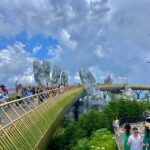
After lunch, you head to Monkey Mountain. The headline here is the giant Lady Buddha statue. It’s the kind of landmark that immediately gives you scale—tall, visible, and made even more impressive by the surrounding mountain backdrop.
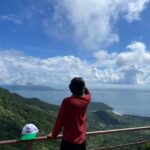
The tour also calls out the garden of bonsai. This is where the mood shifts. Instead of stairs and cave interiors, you get an atmosphere that feels more like a place to wander slowly, pause, and look around. There’s also mention of a fresh breeze, which matters in Vietnam heat.
You’ll spend about 45 minutes at this stop, including photo time and a guided visit. That’s enough for:
- getting a few angles on the statue
- enjoying the garden paths
- taking photos without feeling rushed
One small caution: this stop sounds relaxing, but it’s still part of an overall walking day. If you’re saving your energy, treat Lady Buddha as the moment you slow down and enjoy, not the moment you try to do everything fast.
Price and value: what $25 gets you (and what it doesn’t)
At $25 per person, this tour is priced like good “convenience plus culture.” The big value items are:
- Hotel pickup and drop-off
- English-speaking guide
- Transport by van
- Entrance fees
- Lunch at a local restaurant on the shared morning tour option
Where you can feel the difference is in time and stress. Getting from Da Nang Beachside (or central Hoi An) to these sites on your own can take planning. Paying for the van and guide helps you focus on the experience instead of transit.
What’s not included is also important:
- Personal expenses
- Services not mentioned, like the elevator (the first 146 steps) being at your own expense
So, if you know you’ll need help with stairs, factor in that optional elevator cost when you plan. It’s not a dealbreaker, but it changes the total cost.
Who should book this tour?
This experience is best for you if:
- you want a guided route that links multiple religious/cultural stops
- you enjoy walking and don’t mind stairs
- you want an easy half-day plan with pickup and transport
- you care about the Buddhism context, not only the photos
It’s not a good match for:
- anyone with heart problems, high blood pressure, or other significant health limitations related to exertion
- pregnant travelers
- wheelchair users
- people over 80
If you’re in that “can walk but stairs are iffy” group, you may still be able to manage it, especially with the elevator option for the first 146 steps. Just be honest about your stamina.
Practical tips I’d use before you go
Bring:
- Comfortable shoes
- Camera
- Water
Plan your footwear like you’re going to do a mini hike. Even on a good day, marble surfaces and cave steps can be slippery, and you’ll want stable grip.
Also, this tour runs rain or shine, so pack accordingly. If it rains, your pace will slow down and photos may be wetter than you want. The cave sections are still doable, but you’ll want to move carefully.
And yes: smoking isn’t allowed, so set that expectation early.
Should you book this tour?
Yes—if you want a well-paced, guided half-day that combines Marble Mountains caves and pagodas with Monkey Mountain’s iconic Lady Buddha, this is a solid way to do it without wrestling with logistics. The price is reasonable because it includes pickup/drop-off, an English guide, and entrance fees.
I’d say skip or reconsider if stairs are a major problem for you. Between the 146 + 136 steps and the reality of walking in rain or shine, you’ll feel the climb in your legs. Use the elevator option if you can, but don’t book expecting a fully easy route.
If your priority is authentic context—stone sculpture craft, Buddhism explanations, and actual site walking—this tour lines up well with that goal.
FAQ
What locations does the tour pickup from?
Pickup options include Hội An, Ngũ Hành Sơn, Sơn Trà, Điện Dương, and Da Nang. Hotel pickup is available in Hoi An city center (excluding South Hoi An area) and Da Nang Beachside.
How long is the tour?
The duration is 4–5 hours. Starting times vary, so you’ll want to check availability.
What are the main stops during the tour?
You’ll visit the Marble Mountains (including caves and pagodas), then see the giant Lady Buddha on Monkey Mountain with a bonsai garden, and you’ll also stop at Âm Phủ Cave.
Is lunch included?
Lunch at a local restaurant is included if you select the shared morning tour.
What’s included in the price?
Included items are hotel pickup and drop-off, an English-speaking guide, transport by van, lunch (only for shared morning tour selection), and entrance fees.
Are elevator services included to help with the steps?
The elevator for the first 146 steps is optional, but it’s at your own expense. Elevator service to the top is not included.
How many steps are there at Marble Mountains?
There are 146 steps from the foot to the first stop (Xa Loi Tower), and then 136 more steps up to the cave system.
Does the tour run in bad weather?
The tour takes place rain or shine.
What should I bring and wear?
Bring comfortable shoes, a camera, and water. Wear shoes that work well for walking and climbing.
Is the tour suitable for wheelchair users or people with medical conditions?
No. It is not suitable for wheelchair users, pregnant women, people with heart problems, people with high blood pressure, or people over 80.