REVIEW · SHOW
Da Nang “The Ao Dai” Show: Timeless Vietnamese Elegance
Book on GetYourGuide →Operated by Vietnam TravelMART · Bookable on GetYourGuide
Ao Dai tells Vietnam’s story in silk and motion. I like how the show turns Ao Dai into a living timeline, not just a fashion display, and I really enjoy the costume spectacle of the Nguyen Dynasty royal-palace segment. The only real drawback to plan around: this is a cultural performance with narration, so if you’re looking for a pure runway show with no history context, you may want to set your expectations.
What makes it work in Da Nang is the pace and variety. You’ll move through royal court scenes, an old-market slice of life, a traditional wedding, a lotus-inspired dance, and even the iconic white school uniform look—then everything loops back into a finale about how Ao Dai changed over nearly 300 years.
For practical peace of mind, the host and/or greeter speaks English, the show has English support on screen, and you’ll want to arrive 15 minutes early. Bring your name and booking number when you check in for entrance access.
In This Review
- Key Things I’d Watch For
- Da Nang Ao Dai Show: More Than a Fashion Performance
- Tickets, Timing, and Where You Check In (Ngu Hanh Son District)
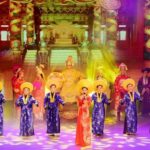
- The Nguyen Dynasty Segment: Timbral Royal Palace on Stage
- 300 Years of Ao Dai: Old Market Life and Everyday Elegance
- Wedding Rituals, White School Uniforms, and the Lotus Dance Symbolism
- Traditional Vietnamese Wedding
- White Ao Dai School Uniform
- Lotus Dance
- The Closing Ao Dai Finale: Bridging Royal Court and Modern Life
- Price and Value: Is $17 Worth It?
- Who This Show Suits Best (and Who Might Prefer Something Else)
- Should You Book the Da Nang Ao Dai Show?
- FAQ
- How long is the Da Nang Ao Dai Show?
- How much does the ticket cost?
- Where is the meeting point?
- What language is available during the show?
- What’s included with the ticket?
- What should I know about arrival time?
Key Things I’d Watch For
- Nguyen Dynasty royal costumes that focus on majesty and rank, not just pretty outfits
- A historical Ao Dai timeline spanning roughly 300 years, with clear scene changes
- Wedding and school-uniform segments that explain how tradition shows up in daily life
- Lotus Dance that links movement and symbolism to Vietnam’s national flower
- English narration support shown on both sides of the stage so you’re not guessing
Da Nang Ao Dai Show: More Than a Fashion Performance
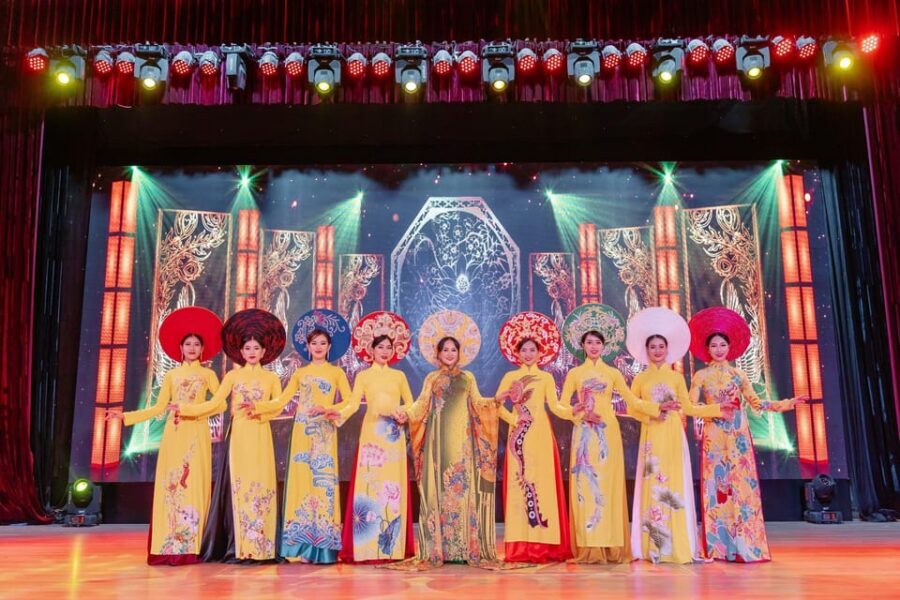
The Da Nang Ao Dai Show is one of those experiences that’s easy to underestimate if you think of it as a costume show only. Yes, the dresses are the headline. But the whole point is that Ao Dai became a visual language for Vietnamese identity—how people lived, what they valued, and how style shifted from older court customs to wider public life.
The show follows a story arc. It starts with the royal-world tone of the Nguyen Dynasty, then slides into scenes that feel closer to folk life: trade in an old market, wedding rituals, and school life represented through the classic white uniform look. Then it shifts again into the modern side of performance, using dance and staging to connect the past to the present.
I also like that it frames Ao Dai as an evolution over time. You’re not just seeing different outfits; you’re seeing how one national dress adapted through changing culture. That makes the show feel like a quick, understandable history lesson you can watch with your head up, not crammed in your phone.
You can also read our reviews of more tours and experiences in Da Nang


Tickets, Timing, and Where You Check In (Ngu Hanh Son District)
You’re looking at a $17 ticket for a 1-day outing, with the performance itself running about an hour according to what people report after attending. Transportation isn’t included, so plan how you’ll get there on your own.
Your meeting point is the Culture House of Ngu Hanh Son District. When you arrive, show your name and booking number for entrance access. Even if the show is scheduled, build in time to get settled—please arrive at least 15 minutes before the performance.
One small detail that matters: the show provides English support, and people say the English narrative is displayed on either side of the stage. That’s a big help if you’re sitting farther back or if you want to follow the story without leaning forward the whole time. Still, arriving early helps you get your bearings and avoid last-minute scrambling.
The Nguyen Dynasty Segment: Timbral Royal Palace on Stage
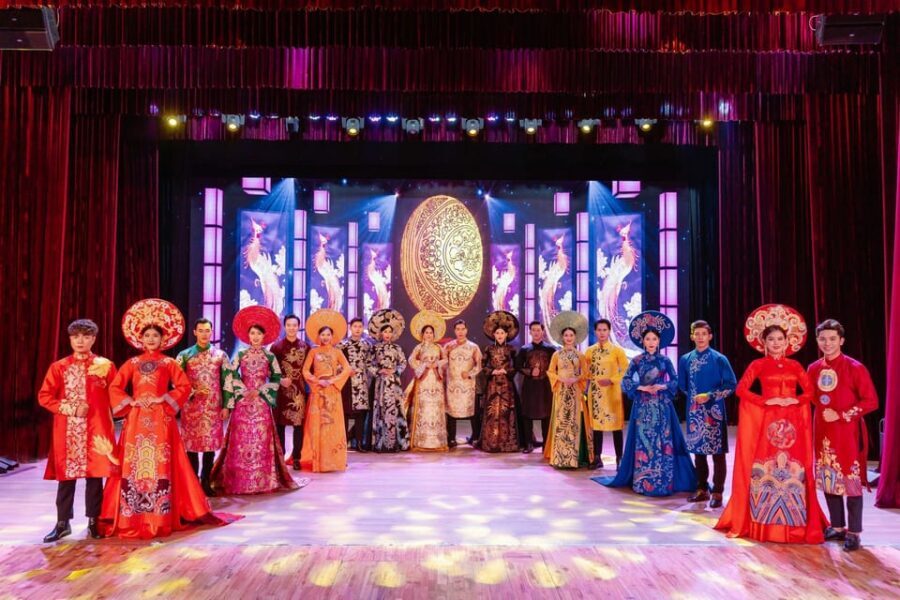
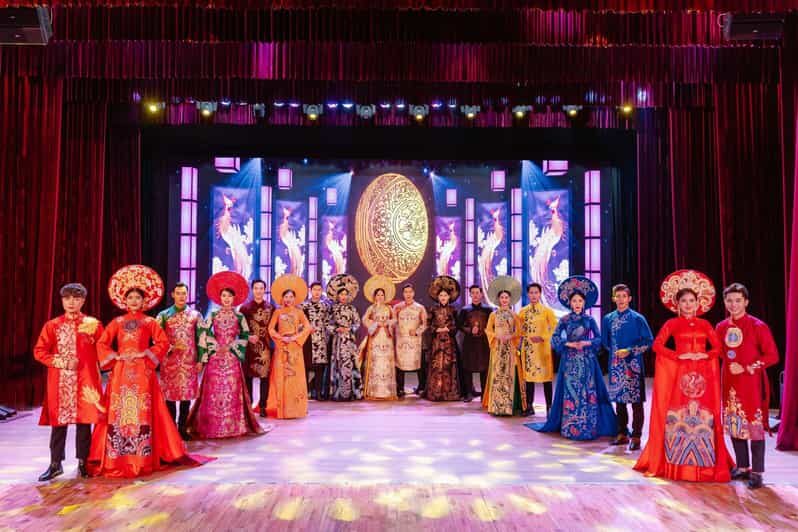
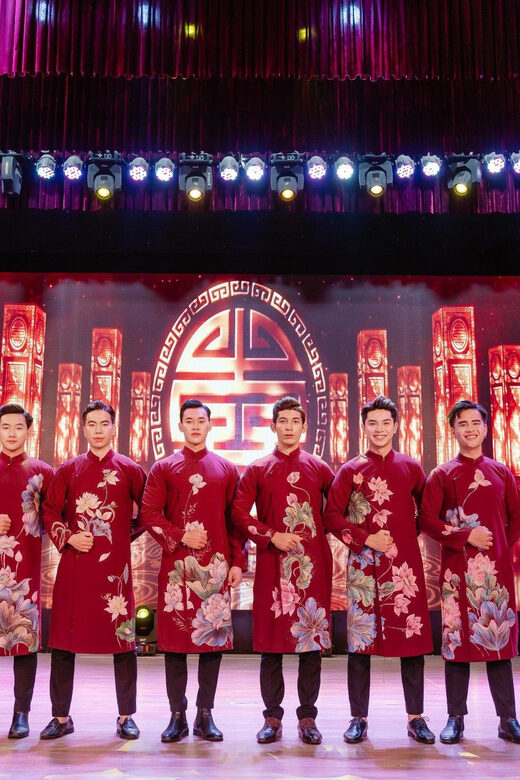
The show’s first major act leans into what royal court life looked like—hierarchy, ceremony, and formal presence. This is the Timbre of the Royal Palace performance, and it focuses on royal costume styles for characters like Kings, Mandarins, Empress dowagers, and maidens.
Why it matters for you: this is where the tone becomes clear. The costumes are not random; they’re meant to communicate rank and the mood of court culture. The staging aims for dignity and majesty, which makes the whole show feel anchored instead of jumping straight to dance.
Look closely at how the outfits change by character. Even without needing a long lecture, you can often spot differences that signal position—exactly the kind of visual storytelling that makes Ao Dai more than clothing. If you enjoy costume design, this is one of the sections that tends to land hardest, because it gives you detail in motion.
Possible catch: if you’re not into “court themes” and you prefer everyday-life scenes, you might feel this part is a more formal start. But it also helps later scenes make more sense, because you’ve seen the contrast.
300 Years of Ao Dai: Old Market Life and Everyday Elegance
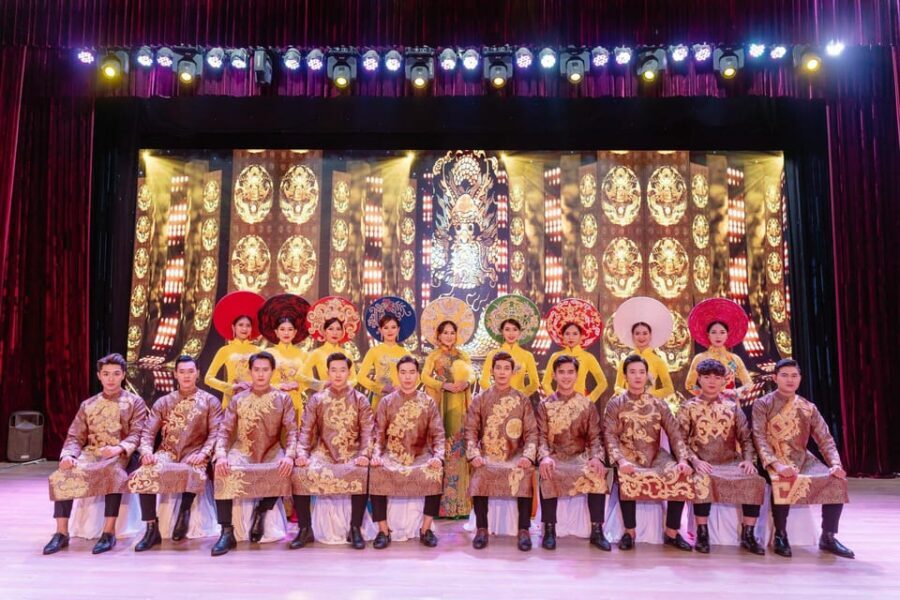
Next comes the segment built around 300 years of ancient Vietnamese Ao Dai. This act uses an Old Market scene replica to reflect trade activity from roughly the 17th to the 19th centuries. The visual theme is simple, humble, elegant, and reverent—an attitude you can feel in the way scenes are staged.
This is a smart move for the show’s storytelling. A royal wardrobe tells one part of the identity story. An old market tells another: how people dressed as they worked, traded, and moved through public spaces. It’s the bridge between court culture and ordinary life.
For you, this part can be especially satisfying if you like context. You start to see Ao Dai not only as a national symbol but as a flexible cultural costume that shows up across different social settings. The show effectively uses costume shifts to make time feel visible—almost like flipping through pages of a book, except the pages are moving.
A practical note: since this is a stage performance with multiple scenes, the transitions are quick. If you’re the type who likes to photograph every outfit, keep your camera ready during wardrobe moments, not between scenes.
Wedding Rituals, White School Uniforms, and the Lotus Dance Symbolism
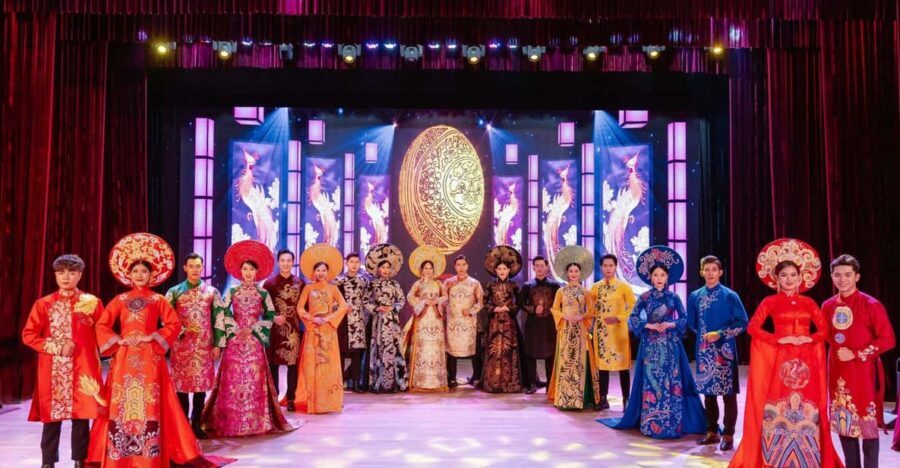
The show doesn’t treat tradition like a museum piece. It stages tradition as something human: community events, education, and symbolic beauty.






Traditional Vietnamese Wedding
The Traditional Wedding performance captures wedding culture with rituals that reflect both past and present. You’re not just watching costumes; you’re watching a cultural script—movements and roles that communicate what weddings represented in Vietnamese society.
This segment tends to appeal because it’s familiar even if you don’t know the exact Vietnamese details. The emotional tone is clear, and the staging helps you understand the structure of a ceremony without needing to translate every word.
White Ao Dai School Uniform
Then you get one of the most recognizable Ao Dai looks: the white Ao Dai Vietnamese school uniform segment. This includes the idea of Dong Khanh as the inaugural girls’ school in Vietnam, with the uniform used to represent young girls working toward education and virtues like simplicity, elegance, politeness, humility, and delicate communication.
Even if you don’t know the historical background before the show, the presentation makes the lesson accessible: uniforms can reflect cultural expectations, and style can carry values. It’s also a nice contrast to the royal-court tone earlier in the evening—same overall national dress idea, but different meaning.
Lotus Dance
Finally, the Lotus Dance brings symbolism to the front. The lotus is Vietnam’s national flower, and the dance blends traditional and contemporary movement. The goal is purity and elegance, expressed through graceful movement and sweet melodies.
This is also a good moment to relax your brain. If the historical narrative sections feel like “story time,” the lotus act lets you reset with emotion and rhythm.
The Closing Ao Dai Finale: Bridging Royal Court and Modern Life
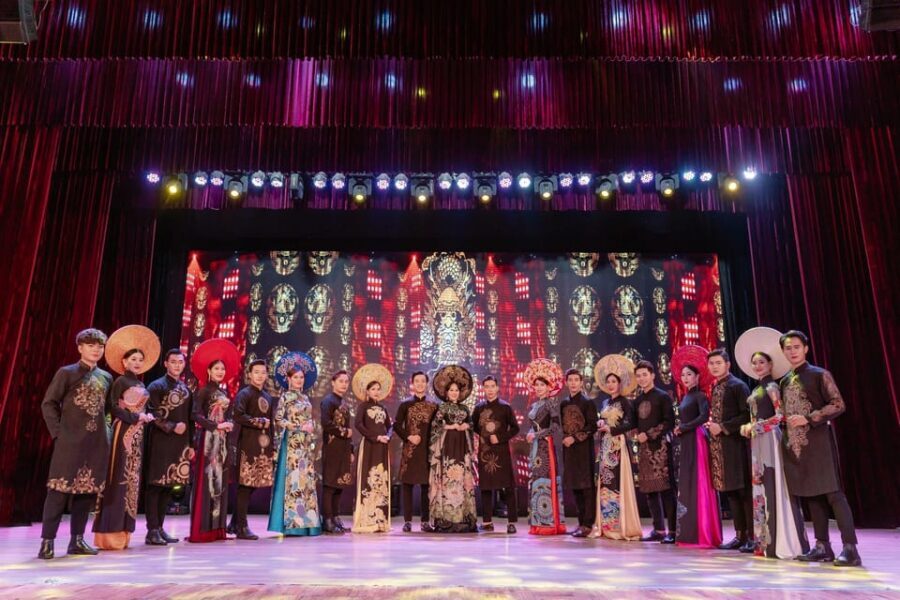
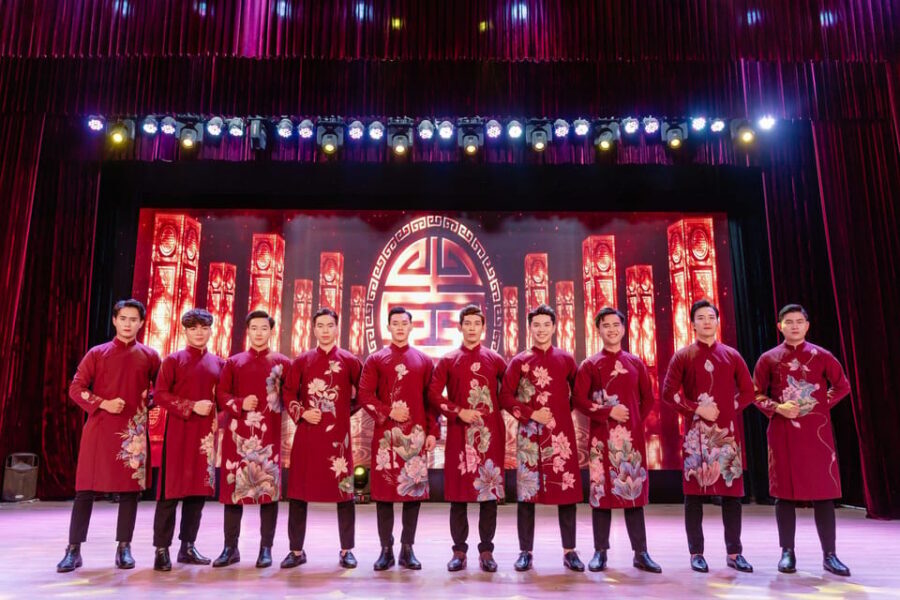
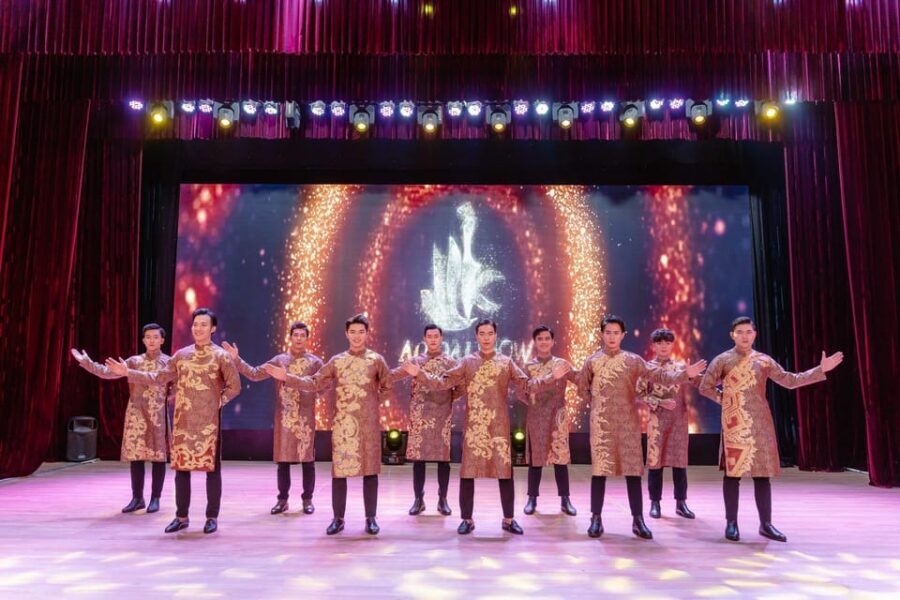
The finale, often described simply as the Ao Dai Show segment, pulls the themes together. The performance narrates Vietnamese history and culture from ancient times to the present, explicitly bridging the gap between the royal court and ordinary people, and blending traditional and modern aspects.
This is where you should pay attention to how the show frames Ao Dai’s evolution. The costumes aren’t just changing for variety; they’re meant to show a long arc of adaptation, with Ao Dai becoming the national dress associated with the Nguyen Dynasty era.
Why I think this ending is effective: it turns scattered scenes into one idea you can hold. Earlier acts might feel like separate stories—palace, market, wedding, school, lotus. The finale connects them and gives you a mental timeline to remember when you’re walking around Da Nang afterward.
Also, it’s a friendly landing point for mixed audiences. If you came for the visuals, you leave with context. If you came for history, you still get the satisfying payoff of seeing culture expressed in movement and costume.
Price and Value: Is $17 Worth It?
For $17 per person with refreshments and a small gift included, the value here comes from two things: you’re buying a complete, structured program, not just watching random dance clips.
You get an English-narrated cultural story, multiple distinct segments, and the production value that comes with costume changes across historical periods. Since transportation isn’t included, you’ll want to factor your local travel cost into the real “total spend.” But if you’re already in central Da Nang and can reach the Culture House of Ngu Hanh Son District easily, this price is quite reasonable for a one-evening (about one hour) show.
Included refreshments also matter more than you might think. After a day of sightseeing—especially in warm weather—you don’t want the distraction of finding snacks during the performance. The show takes care of the basics so you can stay focused on the story and costumes.
Who This Show Suits Best (and Who Might Prefer Something Else)
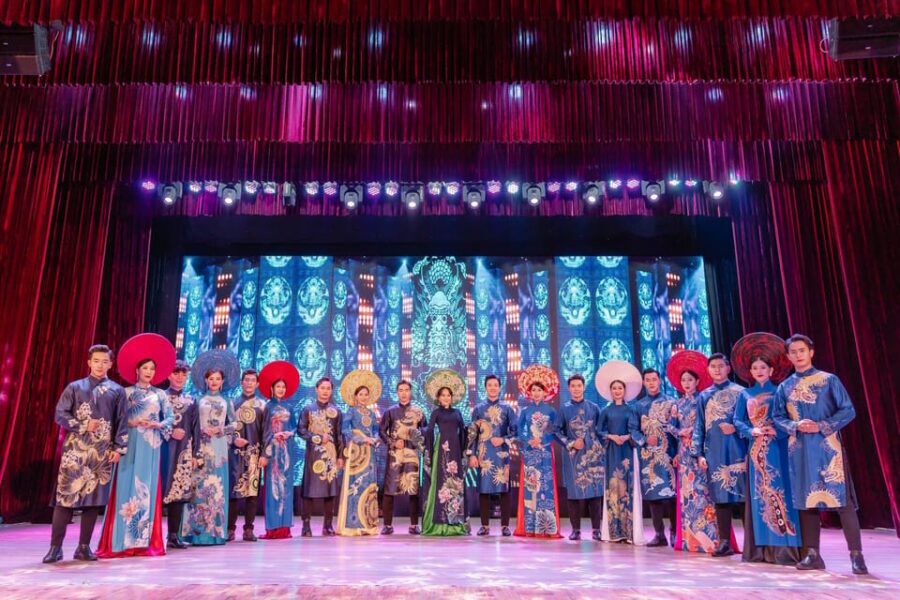
This performance is a strong fit if you want culture you can understand quickly. You don’t need background reading. The show provides English support, and the staging does a lot of the interpretation for you.
I’d also say it’s a good choice for:
- Couples, because it works as a shared event—costumes and dance are easy to appreciate
- Families, because the segments are clearly separated (palace, market, wedding, school, lotus)
- Anyone who likes history told through clothing, symbolism, and performance
On the other hand, you might want to skip it or pair it with something more hands-on if:
- You hate stage shows or prefer museum-style exhibits
- You want a deep historical lecture rather than short, scene-based storytelling
- You came only for photos and aren’t interested in the narrative elements
The show is built to be enjoyable even if you’re only half paying attention. Still, if you want full value, keep an eye on the on-screen English narrative and let the story guide you.
Should You Book the Da Nang Ao Dai Show?
If you want a simple, affordable way to understand why Ao Dai matters in Vietnamese identity, I think booking is a smart move. The show gives you multiple scenes tied to Vietnamese cultural evolution, and it does it with costume detail and dance that keep your attention.
Book it if you like visual storytelling, costume history, and symbolic dance. If you’re very sensitive to being seated in a theater environment or you prefer self-guided cultural time over staged performances, you might consider another option.
Either way, do one thing that improves the whole experience: arrive about 15 minutes early, check in with your name and booking number, and settle in. Once you’re watching with your bearings, the show becomes easy to follow—and that’s when the $17 feels like a fair trade.
FAQ
How long is the Da Nang Ao Dai Show?
The experience is listed as valid for 1 day, and attendees often describe the performance as about an hour.
How much does the ticket cost?
The price is $17 per person.
Where is the meeting point?
The meeting point is the Culture House of Ngu Hanh Son District.
What language is available during the show?
English is supported, and the host/greeter is available in English.
What’s included with the ticket?
Your ticket includes the Ao Dai Show entrance, refreshments, and a small gift.
What should I know about arrival time?
Please arrive at least 15 minutes before the show time, and show your name and booking number for entrance access.