REVIEW · PHOTOGRAPHY SESSIONS
Danang On the Waterfront Photo Tour
Book on Viator →Operated by Vietnam in Focus - Day Tours · Bookable on Viator
Sunrise docks turn into a photo lesson. This is a 4-hour, early-morning Da Nang shoot built around documentary photography—fishermen, busy dock work, boats on the East Sea, and the city skyline in changing light. You also get a hands-on guide who shows you how to see fast-moving scenes clearly, not just snap pictures.
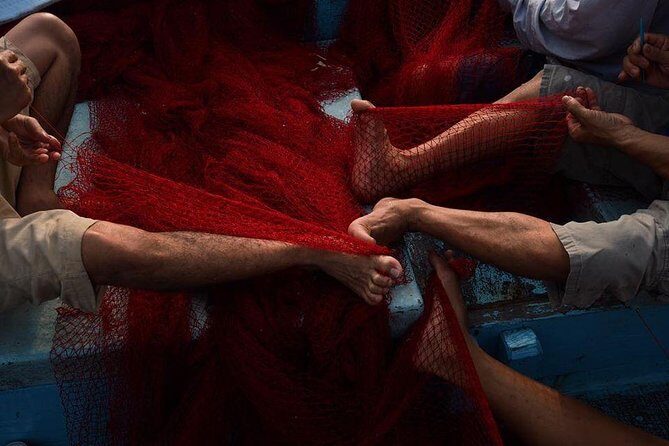
I love the photo coaching during the tour and the structured photo review afterward, which helps you improve what you already shot. I also like that the subject matter is real working waterfront life—coracle boats, market sorting, and harbour ice prep—stuff most visitors miss because they’re still asleep.
The only catch is the 5:30am start. You’ll need to be ready for an early wake-up and a bit of morning walking, and the tour is weather dependent.
In This Review
- Key points worth knowing
- Why Da Nang’s Waterfront Works So Well for Photos
- Hotel Pickup and the 5:30am Timing That Changes Everything
- Stop 1: Danang City Beach and the Overnight-Catch-to-Market Flow
- Stop 2: Danang Harbour Streets, Coffee, and a Real Mid-Tour Feedback Reset
- Stop 3: The Doc’s and Ice-Loading Storytelling
- What You Actually Learn: Documentary Basics in Changing Early Light
- About the Boat and Skyline Moments You’ll Get
- Price and Value: Is $122.06 Worth It?
- What to Bring and How to Get the Most from the Early Start
- Who This Tour Fits Best
- Should You Book the Danang On the Waterfront Photo Tour?
- FAQ
- What time does the tour start in Da Nang?
- How long is the Danang on the Waterfront Photo Tour?
- Is hotel pickup included?
- Is food or drinks included?
- What does the tour focus on?
- Will I have time to review my photos with the guide?
- Is this a private tour?
- What happens if the weather is poor?
Key points worth knowing
- 5:30am start, real light: you’re aiming for early-morning conditions when the waterfront looks most “alive” on camera
- Coach + review: you don’t just shoot; you get feedback and time to review what you captured
- Docks to skyline: you’ll cover the beach, the harbour area, boats/working water, and views across Da Nang’s skyline
- Story-based shooting: the guide focuses on building a narrative around people’s work, not just isolated images
- Fast scenes, practical technique: you’ll learn how to handle movement and changing light, even when conditions aren’t perfect
- Hotel pickup helps: pickup and drop-off make the super-early timing much easier to manage
Why Da Nang’s Waterfront Works So Well for Photos
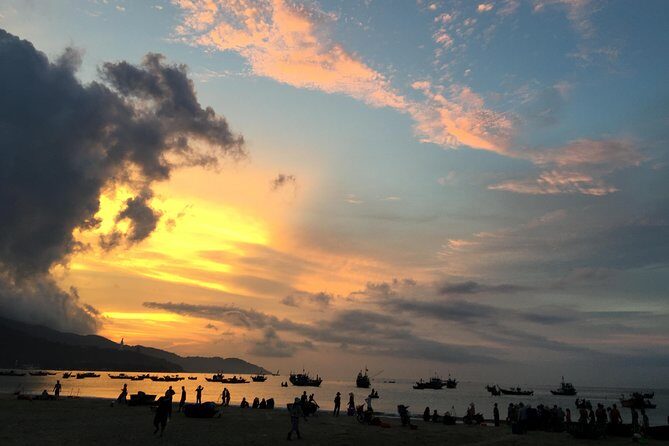
Da Nang’s shoreline gives you a photographer’s dream combo: people doing real jobs, boats moving against the water, and an urban skyline view all in one compact area. On this tour, you’re not chasing “pretty views” only. You’re practicing seeing—how to frame the moment when fishermen bring in overnight catch, when dock workers prep supplies, and when daily commerce is just starting.
What makes it especially good for documentary photography is the variety of human activity. You’ll go from a beach market sorting and selling the haul to harbour work involving ice loading and loading rhythms. That’s the kind of setting where composition matters, because your subject is never sitting still for long. And because it’s early, the light is lower and more directional, which helps you shape photos with shadows and highlights instead of flat midday brightness.
The tour also promises you scenes on the docks, out on the water, and across the Da Nang skyline. That matters because you’re not stuck photographing one narrow angle. You’ll practice different ways of “telling the scene” depending on where you are—close-up relationships on the docks, action patterns around boats, and wider city context when you pull back.
You can also read our reviews of more photography tours in Da Nang

Hotel Pickup and the 5:30am Timing That Changes Everything
Meeting at 5:30am sounds extreme until you see what it does for your photos. Early morning light tends to be more forgiving and more dramatic. It also means fewer casual crowds, which lets you focus on working scenes without distractions.
The practical win here is the included hotel pickup and drop-off. When your start time is this early, transportation logistics are the first thing that usually ruins the experience. Pickup makes it feel more like a planned activity than a self-organized scramble.
The tour runs about 4 hours, with stops that total roughly three hours plus travel/check-ins. That short, focused window is actually a benefit. You get enough time to learn and practice, but not so much time that your concentration fades or your feet start protesting. The pace includes structured pauses, so you’re not just thrown into a camera workout and told to figure it out alone.
And yes, it’s weather dependent. The operator notes the experience requires good weather, with a refund or alternate date if it’s canceled due to poor conditions. In plain terms: plan for the possibility of an adjustment, but don’t assume you’ll cancel unless the weather is truly bad.
Stop 1: Danang City Beach and the Overnight-Catch-to-Market Flow
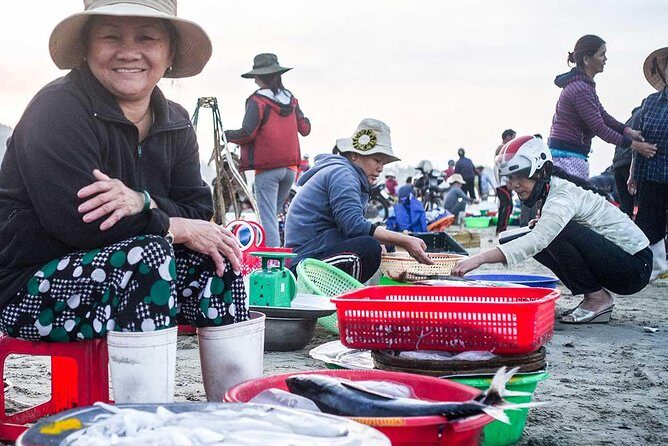
Your first stop is Danang City Beach, where the waterfront story starts with fishermen bringing in overnight catch from the East Sea. You’ll see them rowing tiny coracle boats across the tide, then watch how quickly that catch turns into market activity.
This first hour is valuable because it gives you classic documentary “starter material”:
- Movement: boats crossing the water and people working fast on the shore
- Layers: fishermen, boats, and the market scene working together in one frame
- Context: you’re able to show the process, not just the product
The tour’s focus here is learning the fundamentals of documentary photography. That usually means you’re thinking about what your viewer should notice first, how to use light and shadows in early morning, and how to include enough context so the photo reads as part of a real day—not a random snapshot.
A consideration: the beach and shoreline settings can be tricky for framing. You might find yourself working with changing angles, wet sand, or bright highlights from the sea. The guide’s job is to help you adapt quickly, so you can keep your photos intentional even when conditions shift.
Stop 2: Danang Harbour Streets, Coffee, and a Real Mid-Tour Feedback Reset
After the beach scenes, you head through the waking streets toward Danang Harbour. The schedule builds in a quick coffee stop on the way, which is more than a perk. It’s a reset point when your brain needs a moment to absorb what you’ve already learned.
This second stop is about shifting gears. On the beach, you’re working with open shoreline activity. At the harbour, the environment changes—more built surroundings, more people clustered around work zones, and a different kind of movement pattern.
The tour includes a chance to review what you learned so far and get feedback on the shots you’ve taken. That mid-tour check is a big deal if you want improvement. Most photo tours are a one-way street: shoot, then hope the next morning’s images somehow appear. Here, you get guidance while the scenes are still fresh in your memory, so you can apply fixes immediately at the next location.
If you like hands-on instruction, this is where you’ll feel it most. You can ask questions, adjust your approach, and start thinking like a storyteller with your camera instead of a button-presser.
Stop 3: The Doc’s and Ice-Loading Storytelling
You then enter the harbour area—often called The Doc’s in the tour description. This is where the work gets more intimate and more structured. You’ll see workers shuttling and loading ice for the boats, which gives you a strong visual theme: preparation, labor, timing, and teamwork.
This third stop is where the tour leans into story-driven composition. Instead of only focusing on the “cool” details, you learn how to create a story around people’s work—using composition techniques centered on relationships between subjects. In other words, the goal is to show how people fit into the action, not just capture a single person against a busy background.
If you’re trying to elevate your photos beyond technical sharpness, this is where you’ll get direction. There’s an art to documentary images that feel honest: the moment doesn’t look staged, but the framing still feels purposeful. The harbour work offers lots of natural “relationships” to work with—hands, tools, ice, boats, and faces connected by shared tasks.
One more practical note: harbour environments can be visually dense. If you’ve ever felt overwhelmed by what to include, this stop is designed to solve that problem. The guide’s job is to help you choose what matters in the frame, so your story is clear even when the scene is busy.

What You Actually Learn: Documentary Basics in Changing Early Light
The tour focuses on real-world photography skills that matter at dawn:
- shooting in changing early morning light
- capturing fast-moving scenes
- composing with relationships so images tell a clearer story
- using documentary fundamentals to make your photos feel like part of everyday life
The early morning theme is key. Light changes quickly at 5:30am, especially when clouds or sea haze show up. You’re learning how to keep exposure decisions practical and how to keep your photo intent strong as conditions evolve.
The reviews back up this “teach it anywhere” approach. One traveler described that guide Thomas taught them how to shoot in any light conditions when rain hit, and helped them see the power of black and white and low-light photography. Another review praised Cristian Sorega for being supportive from the first moments and for taking their photography to a higher level with helpful advice. Even if your own conditions are different, the lesson is the same: you’re not just learning one perfect recipe. You’re learning how to adapt.
You’ll also finish the tour with expertly composed photos. That doesn’t mean “everything will be perfect automatically.” It means the guide is guiding you toward compositions that look intentional—so you leave with images you can stand behind, not just a memory card full of maybes.
About the Boat and Skyline Moments You’ll Get
The tour description promises scenes on the docks, out on the water, and across the Da Nang skyline. That mix matters because it forces you to practice three different photo instincts.
1) Docks: tighter storytelling, people and tools, relationships, and natural framing
2) Out on the water: motion and unpredictability, where timing and panning/sequence instincts help
3) Skyline: context, scale, and how your subject sits inside the city
Even if your favorite images are close-ups, getting the skyline shots helps your set feel complete. It’s the difference between a “collection of details” and a visual narrative of a place.
And because the guide is steering the session, you’re more likely to get those wide context images instead of only photographing what’s right in front of your feet.
Price and Value: Is $122.06 Worth It?
At $122.06 per person for about four hours, this isn’t a budget group selfie walk. But the value comes from what’s included and what’s practiced.
You’re paying for:
- Professional photographer guide
- Hotel pickup and drop-off
- time for you to review photos with your guide
- a tour designed around learning (documentary fundamentals, fast-moving scenes, early light)
If you’ve ever tried to get these results on your own, you know the hard part isn’t finding scenes. The hard part is learning how to translate those scenes into consistent photos—especially at dawn when light changes fast.
Also, this is listed as a private tour/activity, meaning only your group participates. Private doesn’t automatically mean better, but in photography it usually means you get more direct help and less waiting while the group catches up.
If you’re traveling solo, you may still find it worthwhile because you’re buying instruction, not just access. If you’re traveling with friends, group discounts can help make the math easier.
What to Bring and How to Get the Most from the Early Start
The tour doesn’t include food or drinks, so plan to handle that with water and your own breakfast strategy before or after the shoot.
Beyond that, the best way to get value is to show up ready to learn. Since the tour includes feedback and photo review, bring the gear you’re comfortable using early in the morning. If you want to experiment with black-and-white or low-light ideas—skills highlighted in a review of Thomas—make sure your setup can handle those creative choices.
Also, arrive a bit early at pickup time so you’re not rushed. With a 5:30am start, the calm start helps you focus.
Who This Tour Fits Best
This is a great pick if:
- you like documentary-style travel photos
- you want more than sightseeing and want photo coaching
- you can handle an early wake-up and a few hours outdoors
- you want a working-life perspective of Da Nang that isn’t the typical tourist postcard
It’s less ideal if you’re only interested in casual snapshots and don’t want instruction or structured feedback. Also, if you hate early mornings, be honest about that before booking.
Should You Book the Danang On the Waterfront Photo Tour?
I’d book it if you want real working waterfront photos and a guide who helps you improve your results while you’re still there. The combination of docks, harbour work (including ice loading), and skyline context gives you range, and the built-in review time means you’ll likely leave with a stronger set of images than you started with.
I’d think twice only if an early 5:30am start is a deal-breaker for you, or if you’re not comfortable spending a few hours outside in early conditions.
If you love learning with your camera—especially adapting to changing light—this is the kind of tour that pays off fast.
FAQ
What time does the tour start in Da Nang?
The meeting start time is 5:30am.
How long is the Danang on the Waterfront Photo Tour?
It runs about 4 hours.
Is hotel pickup included?
Yes, hotel pickup and drop-off are included.
Is food or drinks included?
No. Food and drinks are not included.
What does the tour focus on?
It focuses on documentary photography fundamentals—shooting early-morning light, capturing fast-moving scenes, and creating story-driven compositions around people’s work.
Will I have time to review my photos with the guide?
Yes. The tour includes time to review your photos with the guide.
Is this a private tour?
Yes. It’s listed as private, meaning only your group will participate.
What happens if the weather is poor?
The experience requires good weather. If it’s canceled due to poor weather, you’ll be offered a different date or a full refund.
If you tell me your camera type (phone, mirrorless, DSLR) and your comfort level with low light, I can suggest how to best use this tour for your style.