REVIEW · DA NANG
Danang signature 4n3d- The best Central Vietnam
Book on Viator →Operated by Du lịch Đà Nẵng - Công ty Lữ hành Quốc tế Trường Sa. · Bookable on Viator
First time doing Central Vietnam? Good choice, because this route hits the big classics without you playing transport roulette. I like the way the days are built around major stops like Linh Ung Pagoda and Hoi An Ancient Town, so you get variety fast. I also like the included meals and 3-star stay, which cuts down on planning stress. One heads-up: if you dislike shopping stops or you end up in a larger group, the pacing can feel a bit less sight-focused than you might hope.
You also get a real mix of Vietnam flavors—temples and viewpoints, a UNESCO site, a beach break, and old streets where you can eat your way through the evening. The guide and transport help you move between regions like Da Nang, Ba Na Hills, and Hoi An without wasting daylight. Still, bring patience for a long day on Ba Na Hills, and keep expectations realistic for Golden Bridge photos.
In This Review
- Key things to know before you go
- Why this Da Nang to Hoi An to My Son circuit works in 4 days
- Day 1: Linh Ung Pagoda, Marble Mountains, and the living museum of Hoi An
- Day 2: Ba Na Hills SunWorld, King Mountain cable car views, and Golden Bridge at 1,414m
- Day 3: My Son Sanctuary, My Khe Beach reset, and Dragon Bridge at night
- Day 4: Han Market for real snacks, then you’re done
- Price and what you’re really paying for (at about $275.90)
- Group size, timing, and how to avoid feeling rushed
- Who should book this tour, and who should skip it
- Should you book this 4-day Danang Signature tour?
- FAQ
- What time does the tour start?
- How long is the tour?
- What’s included in the price?
- Are entrance fees covered?
- Is pickup offered and do I get a mobile ticket?
- What happens if weather is bad or I need to cancel?
Key things to know before you go
- Big-name highlights in a tight loop: Da Nang, Ba Na Hills, Hoi An, and My Son in 4 days
- Iconic architecture and views: Linh Ung’s huge Lady Buddha statue and Marble Mountains cave temples
- Cable car to a cool hill retreat: Ba Na Hills is described as cooler weather, reached by a modern cable car system
- The Golden Bridge setting: connected to Thien Thai Garden at about 1,414m above sea level
- UNESCO My Son: a Champa sanctuary tied to Vietnam’s ancient history
- Evening fun built in: My Khe Beach time plus Dragon Bridge light-and-water show
Why this Da Nang to Hoi An to My Son circuit works in 4 days
Central Vietnam can feel like a lot. Da Nang alone is a mix of coastline, pagodas, and markets. Then you add Ba Na Hills, Hoi An, and My Son, and suddenly you’d need spreadsheets just to keep up.
This kind of 4-day plan works because it follows a logical flow: religious sights and natural formations in Da Nang, then the Ba Na Hills heights, then UNESCO and beach time, and finally an old-school market day. You’re not crisscrossing the region all week. You’re doing the classic hits in a manageable order.
Value-wise, the price is easier to judge than it looks at first glance. You’re paying for transport, a tour guide, accommodation (3 stars), and a lot of the “must-pay” items like entrance tickets, plus meals. If you tried to build this day-by-day yourself, transport alone would likely eat a big chunk of your budget—especially with stops spread across different areas.
The one thing to keep in mind: because it’s a set itinerary, you trade freedom for convenience. If you’re the type who wants to linger wherever your feet take you, you’ll want to balance your expectations. If you want a well-paced sampler of Central Vietnam, this is the kind of plan that makes sense.
You can also read our reviews of more tours and experiences in Da Nang.
Day 1: Linh Ung Pagoda, Marble Mountains, and the living museum of Hoi An
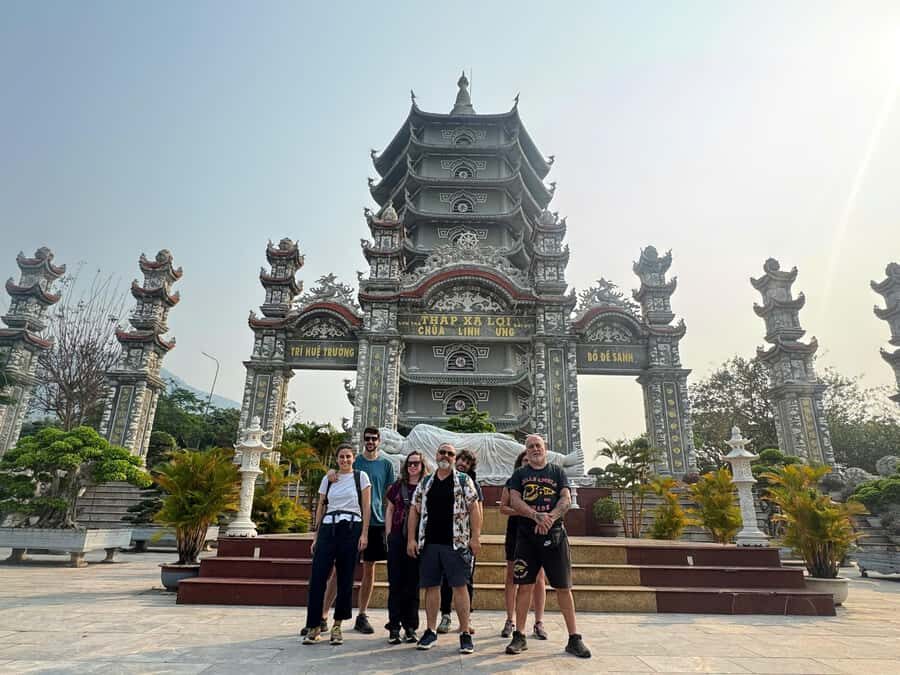
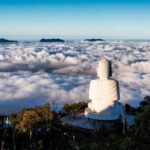
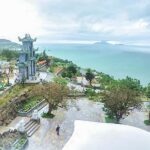
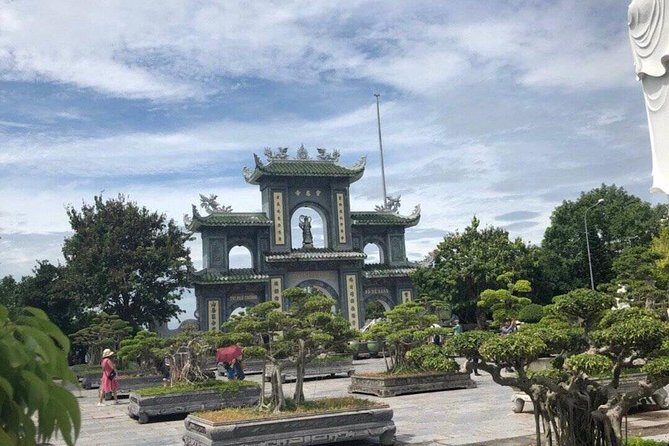
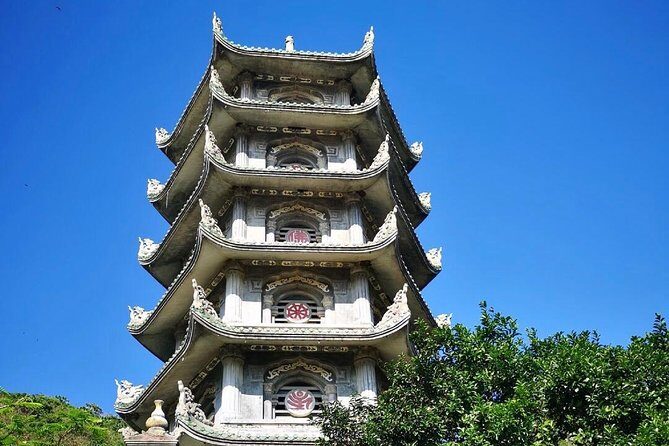
Day 1 is where the tour earns its keep. You start with Linh Ung Pagoda, famous for its massive Lady Buddha statue, listed as 67m high. This is one of those sights that hits even if you’re not super into temples. The scale is the point, and the views around the pagoda area make it feel like more than just a quick photo stop.
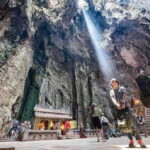
Next comes the Marble Mountains—a cluster of five hills made from limestone and marble. This place is a mix of pilgrimage and exploration: peaks, caves, tunnels, and temples. Even if you only have an hour, it’s enough time to understand why people keep coming back. Just remember, caves and stairs mean you’ll want comfy shoes. Wear something you can walk in without thinking about every step.
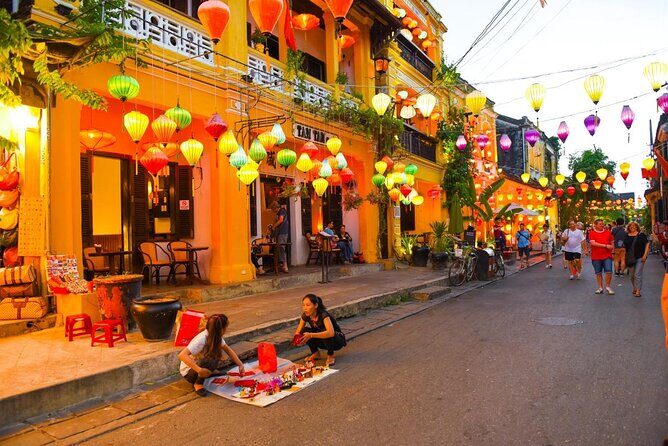
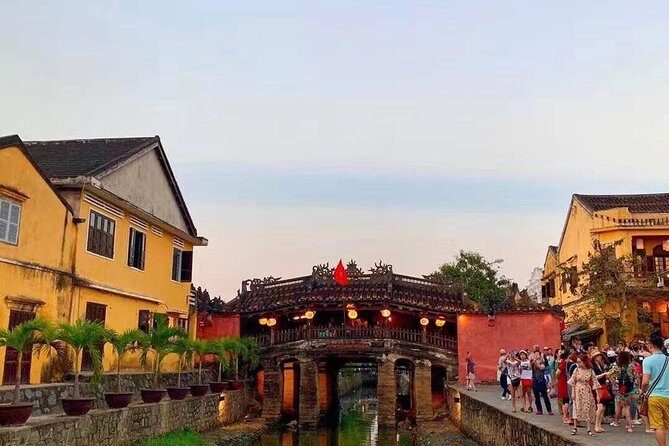
Then you roll into Hoi An Ancient Town, one of Southeast Asia’s old trading centers from the 16th and 17th centuries. The key idea here is that Hoi An feels like a living museum—old-town architecture you can walk through, with heritage buildings like Chinese temples and Japanese-style elements. If you like wandering and people-watching, this stop is a win.
A practical tip for day 1: Hoi An is best when you go a little slower than you think you should. You’ll likely be tempted to rush for photos. Try to balance that with one real meal you enjoy and one calm walk through side streets. That’s where Hoi An turns from a checklist into a memory.
Possible drawback for day 1: when tours hit famous old towns, time can be “guided-walk speed.” If you’re sensitive to being moved along, plan to stop and eat at your own pace once you have a chance.
Day 2: Ba Na Hills SunWorld, King Mountain cable car views, and Golden Bridge at 1,414m
Day 2 is the big viewpoint day. You head to Ba Na Hills (SunWorld) and King Mountain, which the tour describes as a “second DaLat/Sapa” vibe because it’s typically cooler there. That detail matters. Cooler air at elevation can make the cable car ride and walking feel far less exhausting than a hot lowland day.
The headline here is the modern cable car system in Southeast Asia. Even if you’ve done cable cars before, this one is part of the experience. You’re not just traveling; you’re arriving already impressed. From up high, the scenery does a lot of the work for you.
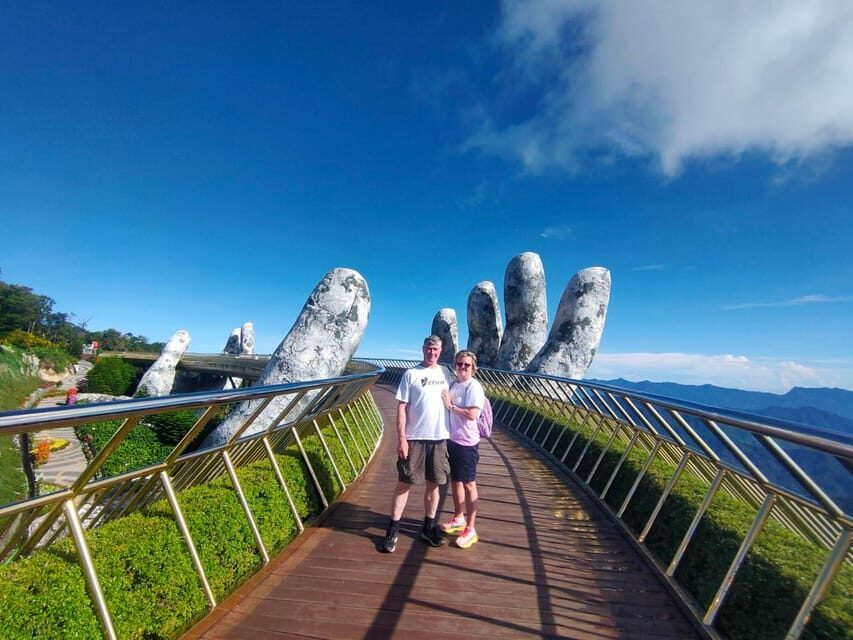
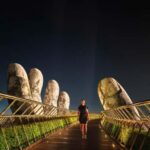
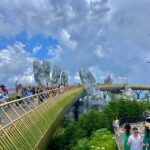
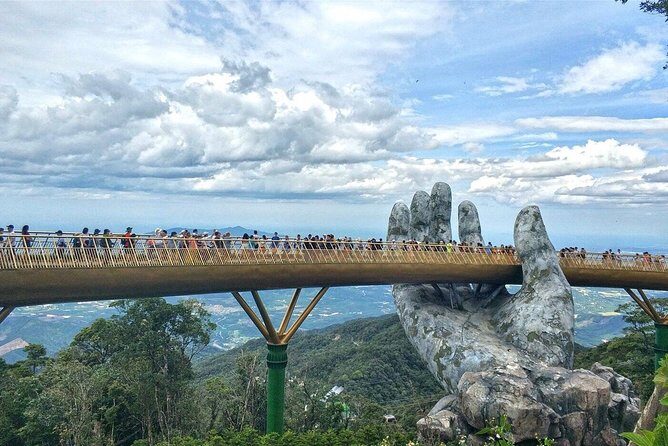
Then you get to the Golden Bridge, connected to Thien Thai Garden at around 1,414m above sea level. The bridge is described as a magical, beautiful destination in the Ba Na Hills complex, and that’s exactly how it’s meant to be experienced: as a showpiece. If you’re the type who judges attractions by how authentic they feel, you may find it less satisfying than the temples and heritage towns later in the itinerary.
This is where I suggest setting expectations. Golden Bridge is a must-see for most people, but it can feel more like a photo-and-architecture stop than a quiet, spiritual moment. Go for the angles. Then move on before it becomes “just another viewpoint.”
Timing note: Ba Na Hills can run long because you’re dealing with multiple movement points: cable car, walking areas, and the time needed to see the signature spot. The benefit is that you’re not coordinating any of it yourself.
Another note on shopping: one review-style concern tied to the overall experience is that the tour can include stops in boutiques/chopping areas. I can’t promise how much you’ll see, but if you’re not into souvenir stops, keep your focus on the sights and use shopping time only for essentials.
Day 3: My Son Sanctuary, My Khe Beach reset, and Dragon Bridge at night
Day 3 is where the tour shifts from manmade wonders to a deeper cultural anchor, then back to pure relaxation.
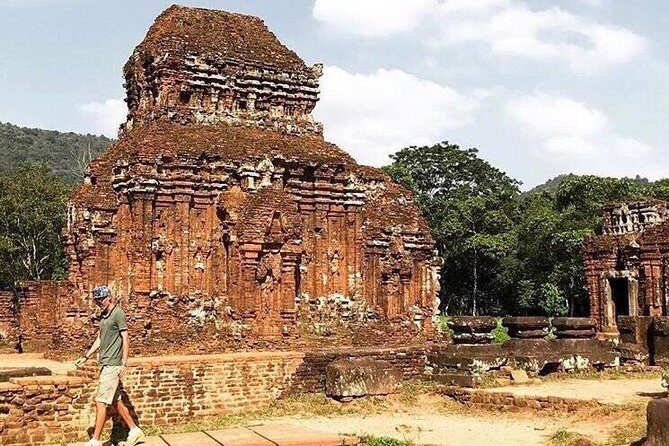
First is My Son Sanctuary, a UNESCO World Heritage Site and a strong example of the ancient Champa civilization in southern Vietnam. It’s described as an independent state from around the 2nd to the 17th century. That range matters. You’re not just looking at one era—you’re seeing evidence of long-lived cultural presence. Even if you aren’t a history buff, UNESCO sites can feel powerful because the place itself explains so much.
Practical approach: temples and ruins are easiest when you take a moment to understand the layout instead of racing from one structure to the next. Ask your guide what you’re looking at as you go. The guide is part of the value here, because the site is older and more layered than most single-day stops.
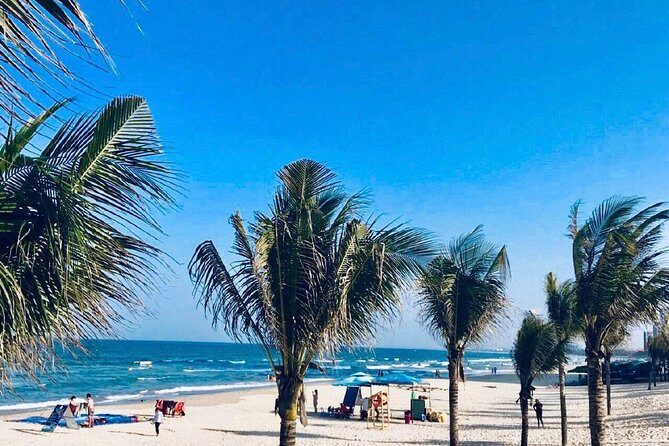
After My Son, you head to My Khe Beach, described as one of Vietnam’s most picturesque beaches. It’s a 20-mile stretch of white sand, and the tour notes it was named by American troops during the Vietnam War for R&R. That detail gives you a different lens on the beach. It’s not just “pretty sand.” It’s a place with modern layers of history and global recognition.
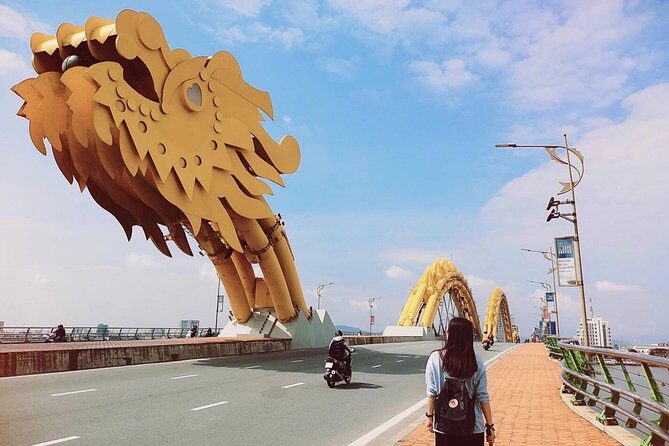
Then comes the Dragon Bridge, called the longest bridge in Vietnam at 666 metres. The tour mentions a dazzling display of lights, fire, and water. This is the perfect pairing with the beach day because it turns the evening into a proper finale instead of just another return-to-hotel moment.
If you’re planning your energy: day 3 can be emotionally “on” during My Son and physically “off” during beach time. That balance is a good thing. Just keep your day from running too late. If you’re tired, you won’t enjoy the bridge show as much.
Day 4: Han Market for real snacks, then you’re done
Day 4 keeps it grounded with Han Market. It’s been operating since the French occupancy in the 1940s, and it’s described as a two-storey local market at a major intersection of Tran Phu Street. This is the kind of stop I like at the end of a tour: you’ve already seen the headline sights, and now you can shop and snack your way through everyday Da Nang.
Because the market is local, it’s not trying to be a theme park. You’ll likely find the kinds of items you expect from a major market—food, small goods, and the daily hustle of people living their normal life. If you want souvenirs, this is where you can compare prices and walk away if it doesn’t feel right.
A small strategy: don’t overbuy on day 4 just because you’re in “last-day mode.” Markets can tempt you. Keep it simple—pick a couple of snacks or gifts that you’ll actually carry and use.




Price and what you’re really paying for (at about $275.90)
At $275.90 per person, this isn’t a bare-bones budget tour. But it also isn’t just paying for transportation and a guide name on a WhatsApp chat. The included items listed here matter:
- Accommodation in a 3-star hotel
- Transport between stops
- Tour guide
- Meals: breakfast 3 times, lunch 2 times, dinner included
- Entrance tickets (and the itinerary also includes at least one free-admission experience, so you’re not paying twice for everything)
When you add it up, the value comes from removing friction. You don’t have to negotiate rides between Da Nang, Ba Na Hills, Hoi An, and My Son. You don’t have to plan each entrance or coordinate meal timing around geography. That alone can save money if you would otherwise pay for multiple separate transfers and tickets.
The “not included” list is also typical: personal expenses and tax. So if you want to keep costs under control, plan your extra spending (souvenirs, extra drinks, optional add-ons) instead of letting it happen accidentally during the day.
For me, this price makes sense if you’re:
- short on time and want a solid sampler,
- traveling with family or friends who don’t want to plan,
- okay with a structured itinerary that trades flexibility for smooth logistics.
If you’re the kind of traveler who wants total freedom and you already know how you’ll move between each area, you might do it for less. But you’ll be doing more work yourself.
Group size, timing, and how to avoid feeling rushed
This experience caps at 30 travelers, which is fairly standard for a multi-stop regional tour. The helpful part is that larger groups tend to be easier to coordinate. The downside is that the pacing can feel less personal.
One concern mentioned in the feedback data is that organization can feel less smooth when groups get bigger—especially once you go beyond something like 10 to 15 people. When that happens, you might find yourself spending extra time waiting or getting less direct attention. You may also notice more frequent stops connected to boutiques or shopping.
Here’s how you handle that as a traveler:
- Decide in advance what you care about most: temples and UNESCO, or beach and photos, or shopping. Then protect time for your top two priorities.
- Don’t treat shopping stops as required. If you’re not buying, step off for a quick look and move back when the group is ready.
- Bring water and snacks if you know you get hungry between meal times. You’ll have included meals, but day rhythm can still get intense around big sights.
Also, Golden Bridge and Ba Na Hills days are naturally “high demand.” If you hate lines and crowd energy, you’ll want to be mentally prepared. If you’re okay with that, it’s still a very efficient way to see a lot in a short span.
Finally: the tour requires good weather. That isn’t just a minor note. On a coastal-and-hills route, weather can decide whether views are crisp or foggy and whether the schedule stays smooth. If conditions are bad, you may get a different date or a refund.
Who should book this tour, and who should skip it
This tour fits best if you want:
- a high-coverage Central Vietnam introduction in 4 days,
- included support like guide, transport, meals, and entrance tickets,
- a mix of UNESCO, beaches, markets, and signature viewpoints.
You should consider skipping (or choosing a more flexible style) if:
- you hate structured group pacing and prefer to roam independently,
- you’re allergic to souvenir stops and shopping detours,
- you want a slow travel pace with lots of unscheduled breaks.
If you’re traveling with family or friends and you want everyone to see the big names without “who’s driving?” arguments, this is the kind of plan that keeps the peace.
It also helps if you’re booking ahead. The tour is commonly booked about 86 days in advance, which suggests it fills up. If you want a specific travel window, don’t wait until the last minute.
Should you book this 4-day Danang Signature tour?
I’d book it if your priority is efficiency without sacrificing the key sights: Linh Ung, Marble Mountains, Hoi An, Ba Na Hills and Golden Bridge, My Son UNESCO, My Khe Beach, Dragon Bridge, and Han Market. The included meals, transport, guide, and ticket coverage make the math easier, and the route design means you see a lot without constant logistics.
I wouldn’t book it if you’re the type who wants total freedom or you strongly dislike shopping stops and set-time browsing. In that case, the same sights can be done independently, but you’ll be responsible for stitching together the transport and timing.
FAQ
What time does the tour start?
The start time listed is 8:00 am.
How long is the tour?
It’s listed as 4 days (approx.).
What’s included in the price?
Included are transport, a tour guide, accommodation (3 stars), meals (3 breakfasts, 2 lunches, and dinner), and entrance tickets.
Are entrance fees covered?
Yes. Entrance tickets are included in the package.
Is pickup offered and do I get a mobile ticket?
Pickup is offered, and mobile ticketing is included.
What happens if weather is bad or I need to cancel?
The tour requires good weather. If it’s canceled due to poor weather, you’ll be offered a different date or a full refund. There is free cancellation up to 24 hours before the start time for a full refund.