REVIEW · AM PHU CAVE TOURS
Hoi An: Marble Mountains & Monkey Mountain -Am Phu Cave Tour
Book on GetYourGuide →Operated by Hiep Travel · Bookable on GetYourGuide
Some places feel like they have a secret agenda. This half-day route pairs Marble Mountains caves with Monkey Mountain’s towering Linh Ung pagoda and a sweep of the Son Tra coastline. I especially like the contrast: limestone tunnels on one side, big white Buddhist sculpture views on the other. One thing to consider is the effort level. You’ll climb a lot of stairs, and the tour can be rain or shine.
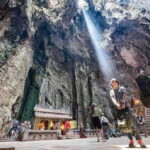
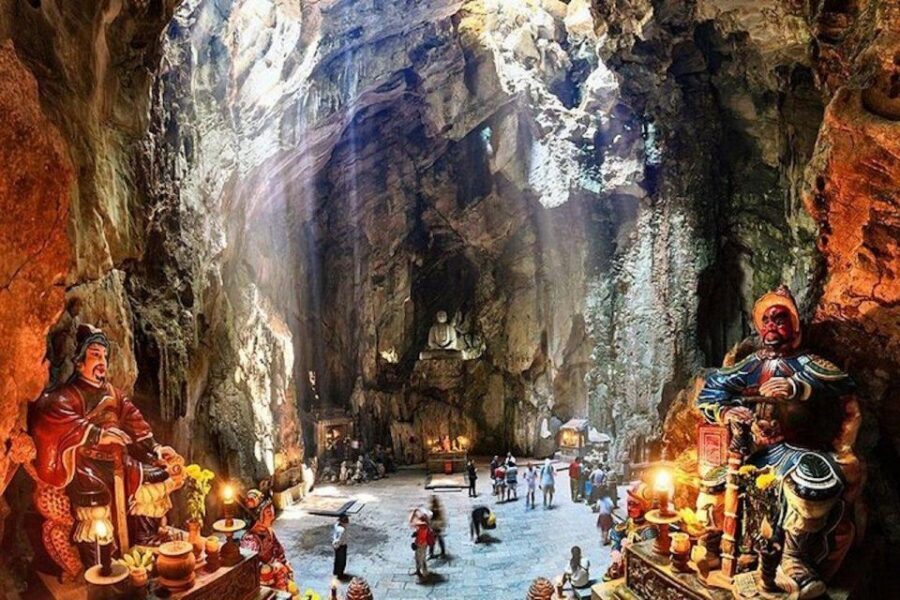
My favorite part is how the caves change the mood as you walk in and out of the light. Those natural openings create a strange, almost stage-lit glow inside the rock. I also like that you’re not just looking at temples from a distance—you get up close to the main sites, including the Lady Buddha area on Monkey Mountain.
The only real drawback is practical: this experience isn’t gentle on your legs or heart. There are 146 steps to the first stop on Marble Mountains and 136 more to reach the cave system, with an elevator option for the first section at your own expense.
In This Review
- Key highlights to look for
- Marble Mountains: stairs, caves, and how the day gets going
- Am Phu Cave (Hell Cave): why it’s the standout
- Linh Ung pagoda on Monkey Mountain: the Lady Buddha payoff
- Son Tra peninsula views: when a viewpoint is actually useful
- Local stone factories and lunch: value beyond the monuments
- Price and logistics: what the $27 really covers
- Pacing, group style, and comfort level
- Should you book this Hoi An Marble Mountains & Monkey Mountain tour?
- FAQ
- How long is the Hoi An Marble Mountains & Monkey Mountain – Am Phu Cave Tour?
- What’s included in the price?
- Is lunch included?
- Do I need to pay extra for the elevator?
- What are the step counts on Marble Mountains?
- Will the tour run if it rains?
- Are there extra charges on public holidays?
- What should I bring, and what can’t I bring?
Key highlights to look for
- Am Phu Cave (Hell Cave): often described as the longest and most mysterious part of the experience
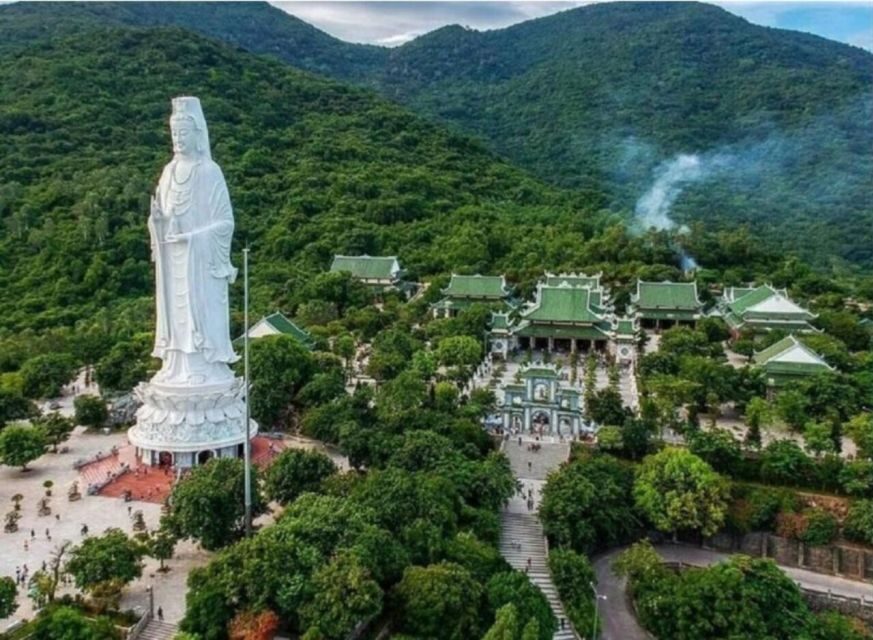
- Lady Buddha on Monkey Mountain: the 18th-century Linh Ung pagoda and a 67-meter white Goddess of Mercy statue
- Son Tra peninsula + bay views: a payoff that makes the climb worth it, especially with a camera
- Natural cave lighting: light filters through rock openings for an atmospheric walk
- Marble Mountains tunnels and cave entrances: more variety than you’d expect from a “mountain visit”
- Local stone factories and lunch: you get real local flavors, and the tour is usually low-pressure about extra spending
Marble Mountains: stairs, caves, and how the day gets going
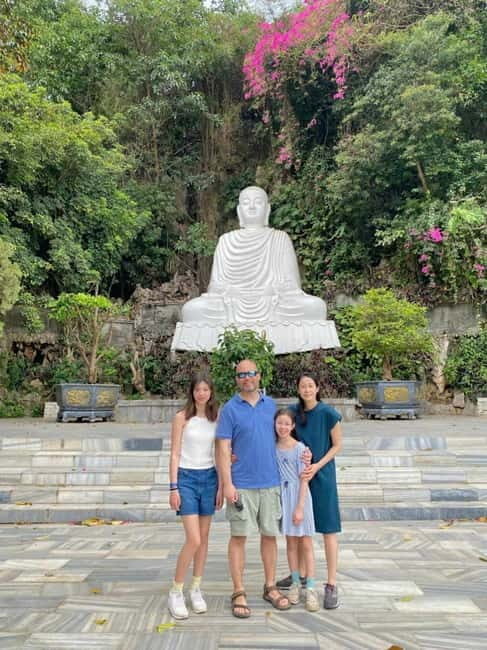
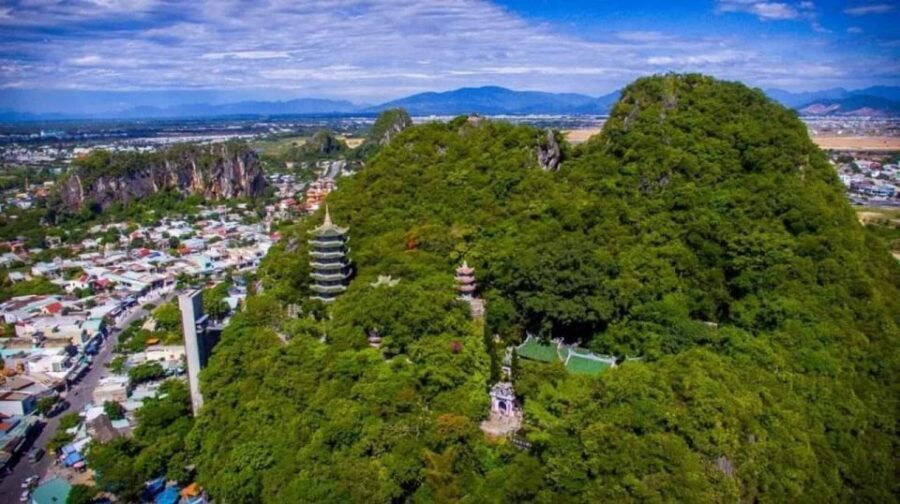
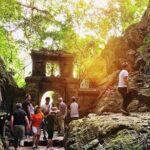
The tour starts with hotel pickup in the Hoi An or Da Nang area, then a ride toward the Marble Mountains complex. Once you arrive, the walking begins right away on trails that climb through the hill—this is not a sit-and-snap kind of stop.
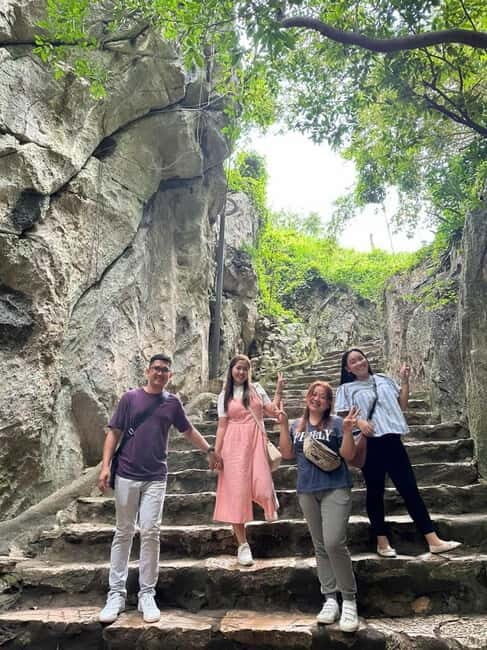
One practical thing I’d plan for: the step count. There are 146 steps from the foot of Marble Mountains to the first stop (Xa Loi Tower), and then another 136 steps to reach the cave system area. If that sounds like a lot, the tour notes you can use an elevator for the first 146 steps, but it’s at your own expense. In rain, those steps can feel slippery, so comfortable footwear matters.
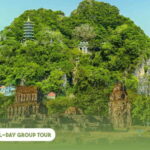
Xa Loi Tower is a good “warm-up” landmark before you head deeper into the caves. From there, you’ll move between cave entrances and pathways that snake through the marble-and-limestone formations. The caves aren’t just holes in the rock—they’re structured, walkable spaces with changing light, and that’s what makes the experience feel more like a guided maze than a quick sightseeing stop.
You can also read our reviews of more tours and experiences in Da Nang.
Am Phu Cave (Hell Cave): why it’s the standout
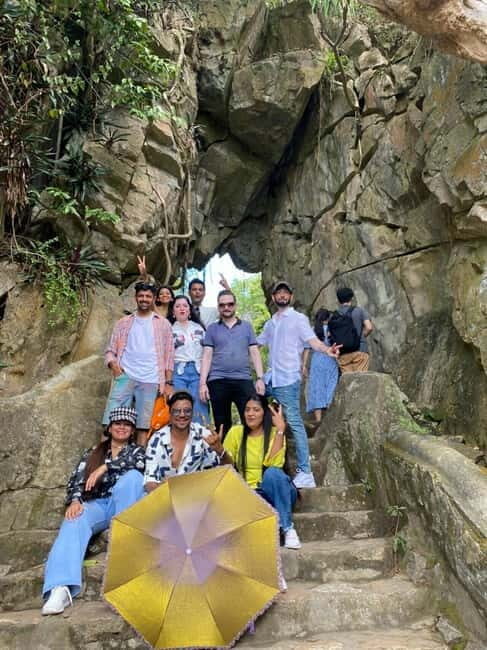
After Marble Mountains, the big cave moment is Am Phu Cave, commonly nicknamed the Hell Cave. The tour information specifically points out that it’s the longest and most mysterious. Translation: you’ll spend real time inside, not just a few minutes.
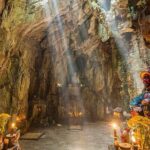
Here’s what you should pay attention to while you’re underground. The caves have openings in the rock that create a special kind of lighting—less like a flashlight beam, more like dim, drifting brightness. That effect is part of the “feel” of the caves, especially as you move from darker stretches into spots where light cuts in.
You’ll also appreciate the way the tour builds the cave experience into the day. First you’re walking uphill, then you’re introduced to pagoda viewpoints and cave entrances, and then you get the main cave system. That pacing helps you stay curious instead of feeling rushed.
The entrance fee for Marble Mountains’ Am Phu Cave is included, which matters because caves often have separate charges. You’ll still want cash for personal expenses and anything not included—especially if you decide you’d rather take the elevator for the first stair section.
Linh Ung pagoda on Monkey Mountain: the Lady Buddha payoff
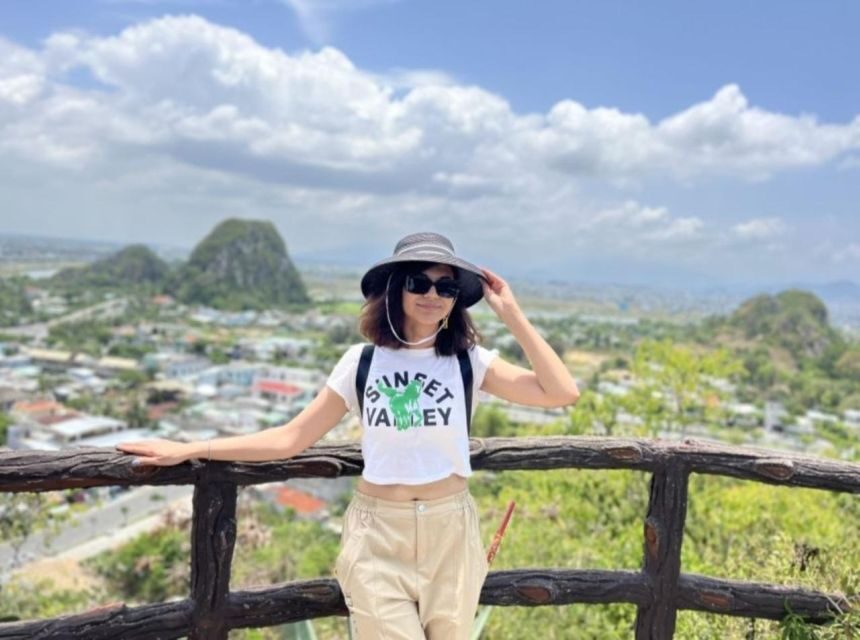
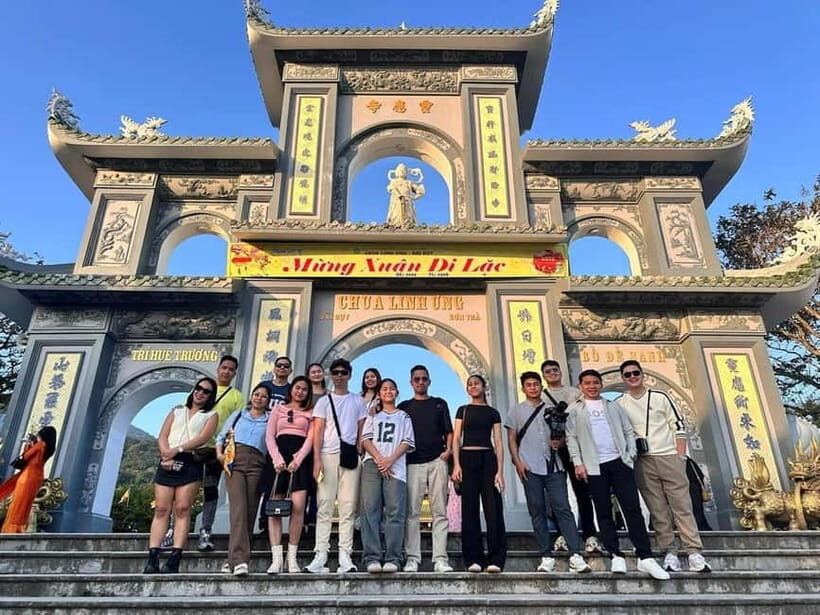
Monkey Mountain is the “big view” and “big statue” half of the tour. Once you arrive, you’ll walk up to the Linh Ung pagoda area, which is built during the 18th century. The focus here isn’t just architecture—it’s the sculpture.
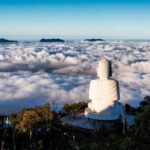
At the top, you’ll see the 67-meter white statue of the Goddess of Mercy. The tour information notes it’s the tallest Buddhist sculpture in Vietnam. Even if you’re not super into temples, this is one of those moments where your camera brain kicks in quickly because the scale is hard to ignore.
The pagoda setting also gives you a chance to slow down. Compared to cave walking, temple areas let you regroup and look outward, and that’s important because Marble Mountains can take a lot out of you.
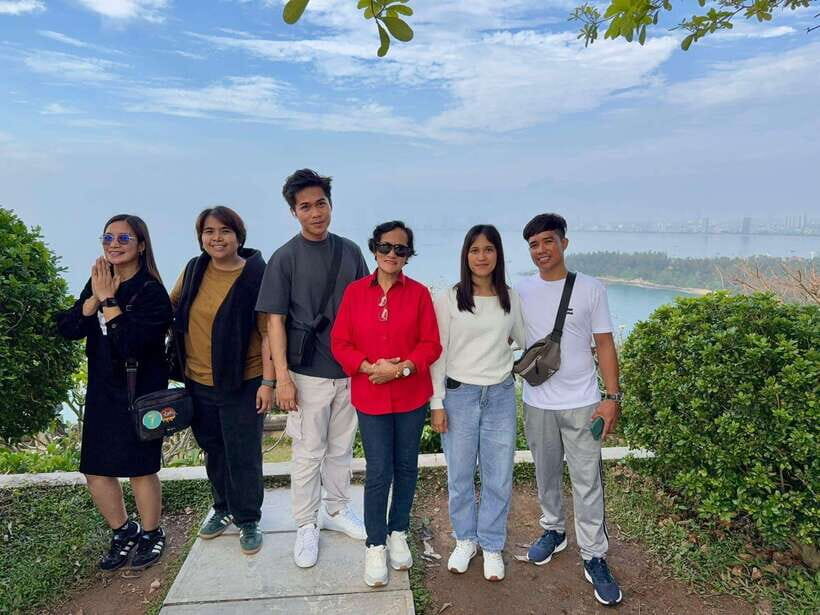
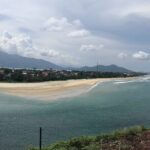
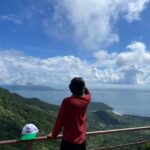
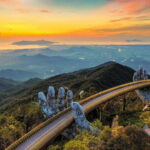
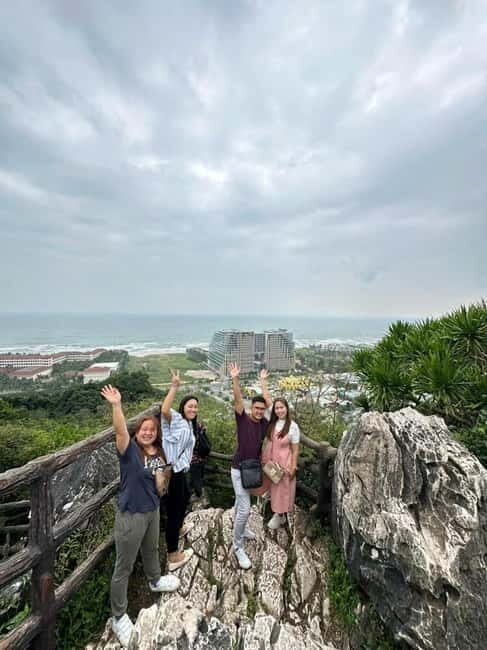
There’s also a scenic angle that makes Monkey Mountain more than a stop by itself. The tour includes a view overlooking the Son Tra peninsula and bay area. If you’re traveling during the bright part of the day, this is a spot where good photo timing can make a difference—watch the light on the water and coastline.
Son Tra peninsula views: when a viewpoint is actually useful
You’ll get views from Linh Ung pagoda on Monkey Mountain, plus another coastal viewpoint included back at Marble Mountains from the Linh Ung pagoda area there. These are not just pretty backgrounds. They help you orient yourself as you move between sites.
From above, you can understand why this region is so popular. Son Tra sits across the water like a natural landmark, and the bay views give you a sense of how close Da Nang and Hoi An are to the coast. It’s also easier to appreciate the setting when you’ve seen both cave interiors and wide open horizon lines in the same half-day.
For your camera, bring a steady grip and plan for a mix of light levels. You’re going from dark cave interiors to bright hillside views, so your phone or camera might need a quick brightness adjustment between spots. If you don’t want to deal with tech fuss, just use the natural light for the outdoor pagoda area and keep cave photos simple.
Local stone factories and lunch: value beyond the monuments
A tour can feel “busy” and still be fun. This one adds value by including a stop connected to the region’s stone craft. You’ll visit local stone factories, which helps you understand what you’re actually looking at when you’re surrounded by marble-and-limestone formations.
Then there’s the lunch of authentic local cuisine. The tour summary includes lunch as part of the experience, which is a smart move for a 5-hour day. When your day includes stairs plus caves plus travel time, having a real meal planned beats hunting for food between transfers.
One subtle benefit from how the day is run: it’s typically not about pushing souvenir shopping at every corner. Past guests praise this tour for avoiding pressure to buy things, tip, or spend extra cash. That doesn’t mean there’s zero opportunity to spend, but it does suggest the pacing feels more respectful than transactional.
If you’re the type who likes to buy one or two small items that actually fit your life back home, you’ll still find chances. If you prefer to keep your budget tight, you’ll likely appreciate the tone of the tour.



Price and logistics: what the $27 really covers
At around $27 per person with a ~270-minute (about 5-hour) duration, this is a fairly strong value for a two-site half-day that includes cave entry. The included items are practical: an English-speaking guide, hotel pick up and drop-off by air-conditioned vehicle, bottled water, and entrance fees for Am Phu Cave.
What isn’t included is where you should watch your wallet:
- Elevator to the top for the first 146 steps (if you choose it)
- Personal expenses
- Services not mentioned
Also note the public-holiday surcharge: there’s an extra 100,000 VND per person on certain public holidays, including Lunar Tet dates listed for early 2026 and Jan 1, 2026. If your trip lines up with one of those busy periods, expect that small add-on.
Pickup is flexible with many options across Hoi An and Da Nang. One detail that matters if you’re staying at a resort near Son Tra: some locations have an extra 300,000 VND per way pickup charge (for places like Hoiana Resort, Bliss Resort, Tui Blue Resort, Intercontinental in Sơn Trà, or similar areas).
The tour also includes optional audio guide in English, which is handy if you want extra context while still moving at a comfortable pace.
Pacing, group style, and comfort level
This tour runs in rain or shine, so don’t assume you’ll get a weather-free day. That means you should pack for “wet steps.” Even if it’s only a light drizzle, cave humidity and outdoor stairs can make the ground feel different underfoot.
The group style is private or small groups available, which is a big deal on tours with climbing. Smaller groups tend to spend less time waiting and more time actually seeing the sites you paid for.
There’s also an important safety note. It’s not suitable for people with heart problems and people over 95 years. Even if you’re under that age range, be honest with yourself about your legs. The step totals are real, and the tour is designed around walking.
Luggage matters too. Oversize luggage is not allowed, and you shouldn’t bring large bags. If you have any bulky items, plan on leaving them in your hotel and traveling light with only essentials.
Should you book this Hoi An Marble Mountains & Monkey Mountain tour?
I’d book this if you want a half-day that mixes cave atmosphere with major temple scale, all with transportation and guide help handled. It’s also a good pick if you like sites that make you move—Marble Mountains and Am Phu Cave are active, and Monkey Mountain’s viewpoint and 67-meter statue give you a strong payoff.
I’d think twice if you hate stairs or need a low-impact day. Even with an elevator option for the first segment, you’re still facing long climbs and cave walking. And because the tour runs in rain or shine, comfy shoes and careful footing are non-negotiable.
If you’re staying in Hoi An or Da Nang and want one easy, organized way to hit both Marble Mountains and Monkey Mountain without logistics headaches, this tour fits the brief. Just come prepared for movement, and you’ll get a day that feels varied instead of repetitive.
FAQ
How long is the Hoi An Marble Mountains & Monkey Mountain – Am Phu Cave Tour?
It’s listed as 270 minutes, which is about 5 hours.
What’s included in the price?
The tour includes an English-speaking guide, hotel pick up and drop-off, air-conditioned transportation, a bottle of water, and entrance fees for Am Phu Cave.
Is lunch included?
Yes. The tour includes a lunch of authentic local cuisine.
Do I need to pay extra for the elevator?
The elevator for the first 146 steps is not included. If you want to use it, it’s at your own expense.
What are the step counts on Marble Mountains?
There are 146 steps up to the first stop (Xa Loi Tower) and then 136 more steps to the cave system area.
Will the tour run if it rains?
Yes. This tour takes place in rain or shine.
Are there extra charges on public holidays?
Yes. There’s an extra 100,000 VND per person on public holidays, including Lunar Tet dates listed for Feb 20-21, 2026, and Jan 1, 2026.
What should I bring, and what can’t I bring?
Bring comfortable shoes, a camera, and cash. Oversize luggage and large bags are not allowed.