
REVIEW · HOI AN COMBINED TOURS
Go Surfing In Danang AND Hoi An
Book on Viator →Operated by Go Surfing · Bookable on Viator
Surf lessons in Vietnam can be surprisingly good. This one is built for catching waves, with small groups and hands-on coaching at Sơn Thủy Beach. It also stretches into Hoi An, so you can line it up with your route along the coast.
What I like most is the teaching style. I love how the instructors break things down into simple moves, and how the vibe stays calm even when you’re new (Tom and Rob are named in accounts from Da Nang lessons). I also like that you’re not stuck watching from shore, because the whole session is geared toward getting you on the waves, not just learning theory.
One thing to think about: surf results depend on the day. If the ocean is quieter or smaller than you hoped, you may still get solid practice and progress, but you might wish for bigger sets.
In This Review
- Key things to know before you go
- Where the session starts: Sơn Thủy Beach in Da Nang
- The 90 minutes: how you actually get value from this lesson
- Small group size (max 8) and why it matters
- Learning from Tom and Rob: what their coaching style feels like
- Hoi An and Da Nang: same surf vibe, different coast timing
- What you’ll learn on the board (and why it clicks fast)
- The fun factor: this is meant to be enjoyable, not intimidating
- Price and value: is $43.47 worth it?
- Practical expectations: weather, waves, and what to bring mentally
- Who this surf lesson suits best
- Should you book Go Surfing in Da Nang or Hoi An?
- FAQ
- Where is the Da Nang meeting point for the Go Surfing lesson?
- How long is the surf lesson?
- What is the maximum group size?
- Is prior surfing experience required?
- What time can I book the activity?
- What happens if the weather is poor?
- What is the cancellation window for a full refund?
- Are service animals allowed?
Key things to know before you go

- Up to 8 people means you’re less likely to be left waiting and more likely to get feedback
- A 90-minute format is long enough to improve, but short enough to stay fun without turning into a slog
- Beginner-friendly instruction helps first-timers stand a better chance of catching waves
- Instructors like Tom and Rob bring clear, patient coaching (and in one Da Nang session, Rob also showed his mural project and art gallery)
- Sơn Thủy Beach is the anchor point and your session ends back where you start
- Weather matters: the activity requires good conditions, and plans can change if the sea isn’t cooperative
Where the session starts: Sơn Thủy Beach in Da Nang
Your Da Nang meet-up point is Bãi Tắm Sơn Thuỷ, Trần Quốc Hoàn, Ngũ Hành Sơn, Đà Nẵng. It’s right by the water, so you won’t waste time commuting across town before you even touch a board. The location is also described as near public transportation, which matters if you’re hopping between Hoi An and Da Nang.
You’ll finish back at the same meeting point. That sounds basic, but it’s a big quality-of-life thing on a busy travel day. You can eat after without planning a second transfer.
You can also read our reviews of more tours and experiences in Da Nang.



The 90 minutes: how you actually get value from this lesson
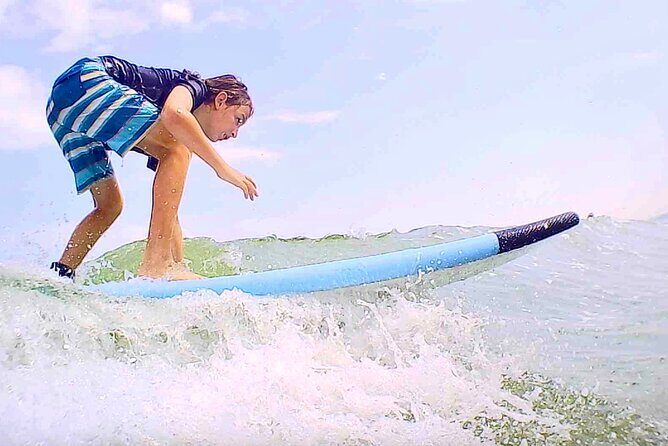
This is an about 1 hour 30 minutes surf session. That length is a sweet spot for beginners because you get enough repetition to feel yourself improving. It’s also enough time for instructors to spot what’s holding you back—stance, timing, paddle rhythm, and how you respond when a wave arrives.
The session is described as instruction with a goal: you should catch many waves, not just spend the whole time swimming for a distant set. In practice, that means your time on the beach is likely used for quick corrections, then the instructors send you back out to apply the fix right away.
The big value here is coaching that doesn’t assume you already speak surfer. The accounts mention clear guidance that’s easy to pick up quickly. One short lesson in Phuket was cited as nothing compared to the advice learned in this session, which gives you an idea of how practical the teaching style is.
Small group size (max 8) and why it matters
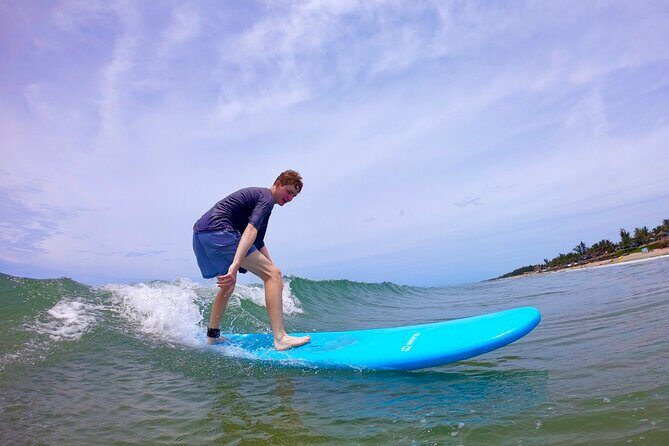
The group limit is 8 travelers. That’s not a huge number, but it changes the feel of the entire lesson. You’re more likely to get individualized cues instead of generic instructions aimed at the loudest people in the group.
It also keeps the energy from turning awkward. Surf can be frustrating if you’re waiting your turn while everyone else is already out. In a small group, you can stay focused, keep moving, and build momentum.
If you’re pairing this with other things in Da Nang or Hoi An—food stops, a beach day, maybe a day trip—this small-group setup makes the lesson easier to schedule without feeling like it will eat your whole afternoon.
Learning from Tom and Rob: what their coaching style feels like
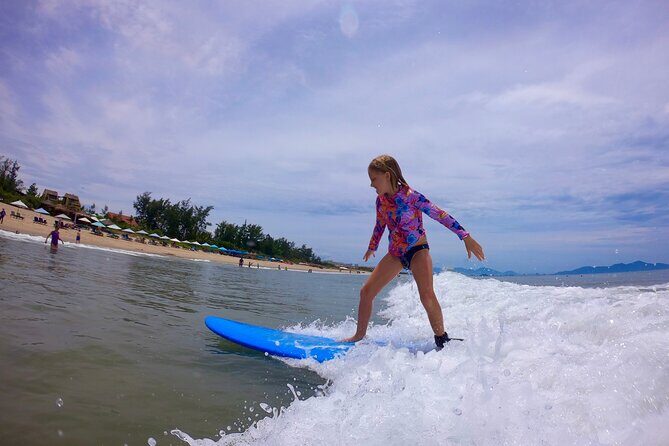
Two instructor names come up in Da Nang experiences: Tom and Rob. The theme is calm, patient teaching with clear steps you can use immediately.
Tom is described as patient and calm with instruction that’s easy to absorb, plus tips that led to real progress in the same session. Rob is described as an amazing instructor who helped people catch good waves, and he’s also noted as welcoming and friendly.
If you’ve taken lessons before and felt like the coach was either too vague or too intense, this is the kind of class that sounds like it’s designed to keep you moving in the right direction without making you feel clumsy. The lesson goal is fun first, then technique.
And there’s a bonus detail from one Da Nang experience: after the lesson, Rob showed a mural project and art gallery. If you enjoy local art and you still have energy after surfing, that little cultural detour can make the whole afternoon feel more complete.
Hoi An and Da Nang: same surf vibe, different coast timing

Your prompt asks for both Da Nang and Hoi An, and the info you have points to Go Surfing running lessons around this stretch of coastline. One account calls it a cool little surf school in Hoi An, Vietnam, and also praises the patience and competence of the trainers.
The practical takeaway: you can choose the location that fits your itinerary. If you’re already in Da Nang for a few days and want beach time without a long ride, the Sơn Thủy meeting point keeps it simple. If you’re basing yourself in Hoi An and want a coastal activity that doesn’t require a full-day commitment, Hoi An-style sessions can fit well.
Expect the same core promise—coaching designed for first-timers and repeat surfers alike. The difference will mostly be the day’s sea conditions and the exact beach setup, not the teaching method.






What you’ll learn on the board (and why it clicks fast)

You’re not just handed a board and a hope. The teaching approach is described as detailed, and it starts from basics whether it’s your first surf or not.
Here’s what that usually means for a beginner, and why it helps you catch waves quickly:
- Your stance and balance: small changes here can be the difference between staying upright and falling on every attempt.
- Timing and paddle rhythm: learning when to paddle and when to commit helps you meet waves instead of chasing them.
- How to respond when a wave hits: instructors teach how to stay calm and adjust in the moment.
- Tips that build on each other: one experience mentions going from the basics to cool tips on the board, with lots of waves caught on the first lesson.
Even when the ocean is not huge that day, you can still improve fast. One account explicitly wished the waves were bigger and also said the session was wonderful and the instruction led to easy uptake. So the learning is real, even if the surf isn’t perfect.
The fun factor: this is meant to be enjoyable, not intimidating

A lot of surf lessons fail a simple test: can you still have fun while learning? The best accounts you have do well on this front. People call it fun and quality, and they stress that instructors are kind, welcoming, and patient.
That matters because frustration is normal in the water. If you’re trying to stand for the first time, you’ll probably wipe out. Good instruction turns that into progress instead of embarrassment.
One theme you’ll notice is that the instructors give tips at a basic level and then help you use them right away. That’s how you go from clumsy attempts to catching waves you actually want to ride.
Price and value: is $43.47 worth it?
At $43.47 per person for about 90 minutes, the value depends on one thing: whether the lesson style matches what you need right now.
If you want a casual beach activity, this might feel pricey compared with just renting equipment on your own. But if you want results—catching waves with guidance that improves your technique quickly—this pricing can make sense.
The key value drivers here are:
- Coaching focused on catching waves (not just sitting on the shore)
- Small group limit (max 8) for more attention
- Beginner-friendly instruction that helps first-timers gain real progress in one session
When a lesson can make you feel like you improved within an hour and a half, that’s the kind of payoff that makes the cost easier to justify.
Practical expectations: weather, waves, and what to bring mentally
This activity requires good weather. If conditions aren’t good, you’ll be offered a different date or a full refund. That’s important because surf is not a factory product—you’re working with the ocean.
So plan your mindset like this:
- You’re going for a learning session.
- You might catch more waves on better days.
- Even on smaller days, you can still walk away with technique and confidence.
Also, the experience asks for moderate physical fitness. You don’t need to be an athlete, but you should be comfortable paddling, getting up and down from the water, and handling some time in the sun and sea.
Who this surf lesson suits best
You’ll likely love this if you’re:
- A first-time surfer who wants clear basics and patience
- Someone who’s taken a lesson before but wants more practical advice
- A couple or small group that prefers coaching in a controlled group size
- A traveler who wants a beach activity you can fit into a half-day window
You might want to consider other options if you’re only happy when the waves are huge. The instruction sounds strong, but the ocean sets the ceiling on how many long rides you’ll get.
Should you book Go Surfing in Da Nang or Hoi An?
Yes, if you want a structured surf lesson with patient coaching and a realistic chance to catch waves within about 90 minutes. The combination of small group size, beginner-friendly instruction, and a beach-based setup makes this a solid choice for most visitors to central Vietnam.
If you’re flexible about conditions and you like the idea of learning technique instead of chasing perfect surf every minute, it’s an easy recommendation. If you’re only chasing big, dramatic wave sessions, you might be happier with a different style of surf day where conditions are more predictable.
FAQ
Where is the Da Nang meeting point for the Go Surfing lesson?
The session starts at Bãi Tắm Sơn Thuỷ, Trần Quốc Hoàn, Ngũ Hành Sơn, Đà Nẵng, Vietnam. The activity also ends back at this same meeting point.
How long is the surf lesson?
The duration is approximately 1 hour 30 minutes.
What is the maximum group size?
This activity has a maximum of 8 travelers.
Is prior surfing experience required?
No. The lesson is described as working for first-time surfers and people who are not new to surfing.
What time can I book the activity?
The listed opening hours are Monday to Sunday from 6:00 AM to 6:00 PM (within the validity range shown).
What happens if the weather is poor?
The experience requires good weather. If it’s canceled due to poor weather, you’ll be offered a different date or a full refund.
What is the cancellation window for a full refund?
You can cancel for a full refund up to 24 hours in advance of the experience’s start time. If you cancel less than 24 hours before, the amount paid is not refunded.
Are service animals allowed?
Yes. Service animals are allowed.