REVIEW · HISTORICAL TOURS
Hue Culture & History Day Tour – Departing Hoi An or Da Nang
Book on Viator →Operated by Stop Go Cafe Travel Company · Bookable on Viator
Hue in one day, minus the headaches. This is a smart way to see Hue’s top royal sites without the stress of figuring out roads, tickets, or timing. I especially like the hotel pickup and drop-off plus a private car and professional driver, which makes the long ride feel manageable.
The other big win is the English-speaking guide—you get clear, practical explanations about what you’re seeing, and how Hue’s Nguyen-era power worked in real life. One consideration: it’s still a long day (about 9 to 10 hours), so you’ll want comfy clothes and patience for a full schedule.
In This Review
- Key things I’d watch for
- Getting From Da Nang or Hoi An to Hue Without Travel Stress
- Price and what’s included (why $148.34 can make sense)
- Mausoleum of Emperor Minh Mang: Formal lines and a calm sense of place
- Hue Imperial City (Citadel): The Nguyen dynasty power map
- Thien Mu Pagoda: A river-side stop with age and meaning
- Tomb of Khai Dinh: Where European and Asian styles meet
- Lunch with drinks: A practical reset in the middle of the day
- How the schedule feels in real life (and how to prepare)
- The guide and driver factor: what makes the day feel easy
- Who should book this Hue culture and history day trip
- Should you book this Hue day tour?
- FAQ
- How long is the Hue Culture & History day tour?
- Where does the tour depart from?
- What are the main stops during the day?
- Is lunch included?
- Are entrance fees included?
- Is cancellation allowed?
Key things I’d watch for

- Private vehicle comfort from Hoi An or Da Nang, so you’re not juggling transit or taxis.
- Entrance fees included, which keeps the day smooth at each site.
- Lunch with drinks and bottled water so you’re not hunting food between tombs and pagodas.
- A guide who explains the why, not just the what, including history tied to the places.
- Four major stops packed into one itinerary, which is great if you only have a day in Hue.
Getting From Da Nang or Hoi An to Hue Without Travel Stress
The whole point of this tour is reducing friction. Hue is far enough from the coast that self-planning can eat up your day fast—especially if you’re trying to coordinate rides, buy tickets on the fly, and still get to key sights before crowds.
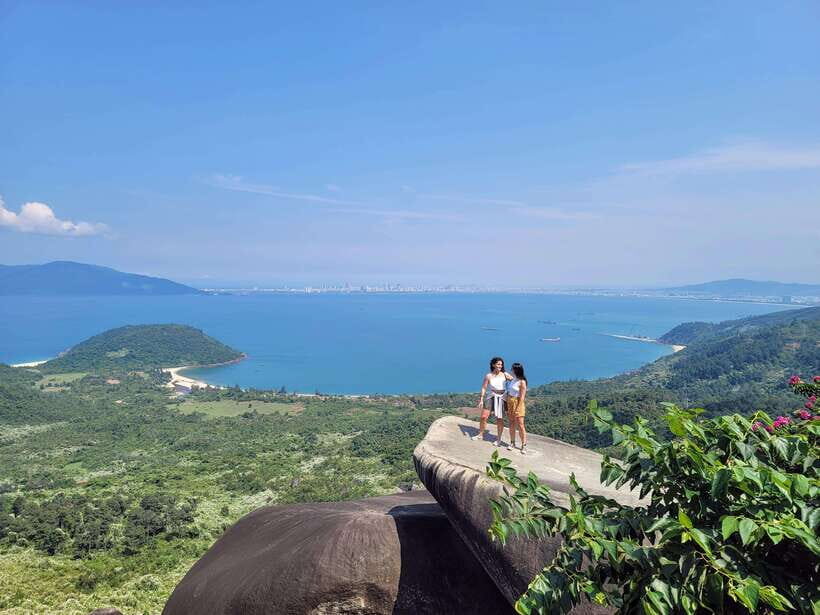
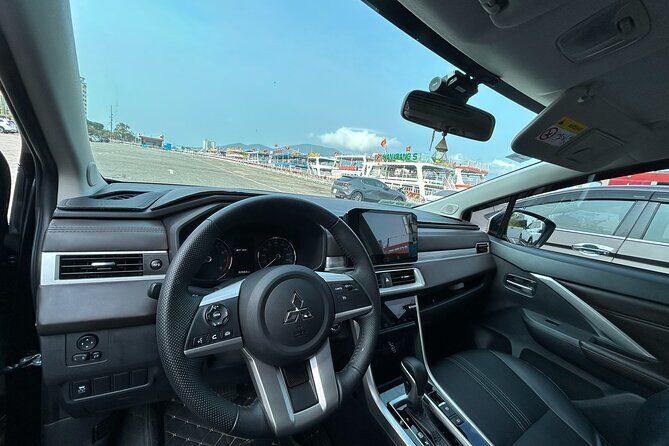
Instead, you get picked up from your hotel area and transported round-trip by private vehicle. You also avoid the mental load of navigating the big route across Hai Van Pass and the rest of the way, which is exactly where a lot of people get tired and decide they’ll just “see what they can.” This keeps your day on rails.
I also like that the tour is private for your group, not a busy shared bus where you spend time waiting for people who moved slower or didn’t hear instructions.
You can also read our reviews of more historical tours in Da Nang



Price and what’s included (why $148.34 can make sense)
At $148.34 per person for about 9 to 10 hours, this isn’t a budget-only option. But you’re not paying for a vague “transport and vibes” day.
What you get, bundled:
- Private car with driver
- English-speaking guide for Hue sightseeing
- Hotel pickup and drop-off
- Entrance fees for the stops listed
- Fresh Vietnamese lunch with drinks and bottled water
That combination is the real value. If you were to plan the day on your own, you’d likely pay for transport plus tickets plus guide time, then spend extra energy managing it all. Here, you trade a bit of flexibility for a day that runs on schedule and covers the major sites.
This is especially good if:
- you’re short on time in central Vietnam
- you want a guided walkthrough of the royal and religious highlights
- you’d rather spend your energy looking around than organizing
Mausoleum of Emperor Minh Mang: Formal lines and a calm sense of place
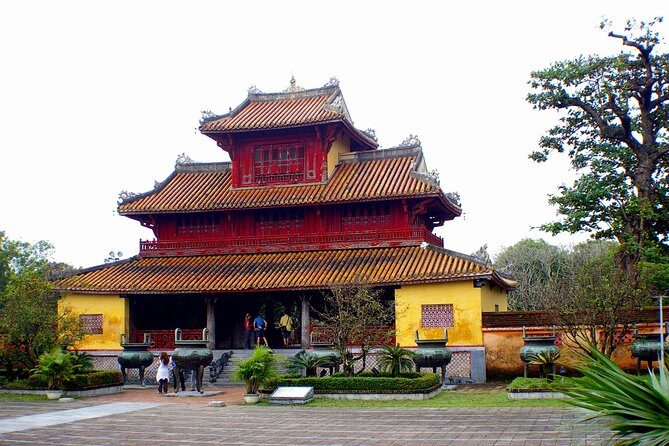
Your first stop is the Mausoleum of Emperor Minh Mang. This site is known for its magnificence and formality, with an architectural design that feels meant to work with its surroundings rather than fight them.
This matters because royal tombs aren’t just “pretty buildings.” They’re built to communicate power, order, and ideology. Minh Mang’s tomb gives you a starting point that makes the rest of Hue easier to understand. When you later see the Citadel and other imperial-era structures, you’ll recognize the same themes of symmetry, authority, and intentional planning.
Time is set at about an hour. That’s enough for a focused visit without turning it into a rushed photo sprint. If you prefer to linger, you’ll likely want to spend extra minutes walking at a slower pace once you’ve seen the main layout.
Hue Imperial City (Citadel): The Nguyen dynasty power map
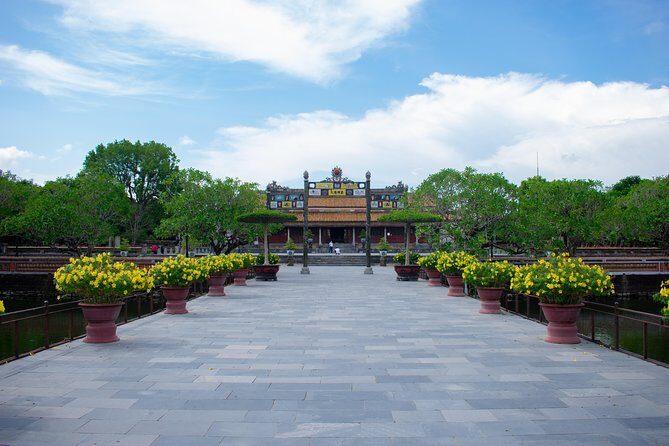
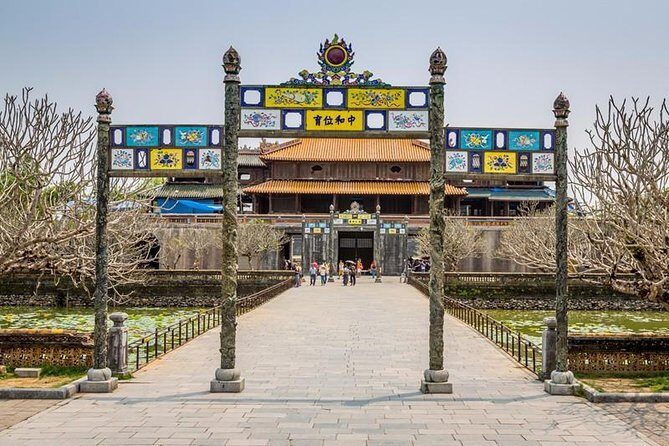
Next up is the Hue Imperial City, the Citadel Complex created by the Nguyen Dynasty from 1805 to 1945. It’s part of the Hue ancient capital recognized as a World Cultural Heritage site, and it’s one of the places that draws attention for good reason.
Walking here gives you structure. You can literally feel how the city functioned as an imperial center—politics, ceremony, and daily authority all designed into the layout. With a guide, you don’t just see walls and gates; you learn what each part was for, and why the design makes sense.
The visit is about two hours. That’s a solid window for soaking up the big picture, taking a break when you need it, and still moving at a comfortable pace.
A small drawback to keep in mind: this stop can involve walking across uneven ground and through areas where you’re in the sun more than you’d like. Wear shoes you trust, and plan to take shade when you can.
Thien Mu Pagoda: A river-side stop with age and meaning
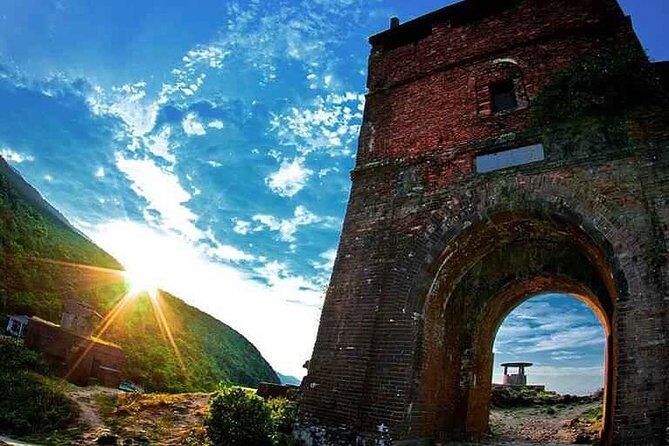
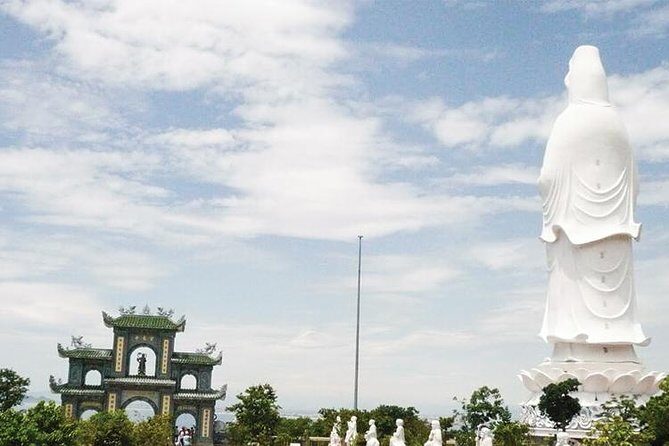
Thien Mu Pagoda is one of Hue’s oldest and most appealing religious buildings. It was built in 1601, and the setting matters: it sits between a river and a pine forest. The name you’ll hear is Thien Mu Pagoda, often translated as Heavenly Lady Pagoda.
This stop is shorter—about 40 minutes—and that works well. It gives you a change of pace from the royal tombs and the Citadel. Instead of empire-as-architecture, you get a quieter mood where religion and daily life intersect.
A guide helps here too, because pagodas can look “just scenic” if you don’t know what you’re looking at. With context, you notice the details with more meaning.
If you’re sensitive to heat, Thien Mu can still feel pleasant because the river-side setting often offers a bit of relief. But you’ll still want water and a hat, since the afternoon sun in central Vietnam doesn’t wait for your schedule.






Tomb of Khai Dinh: Where European and Asian styles meet
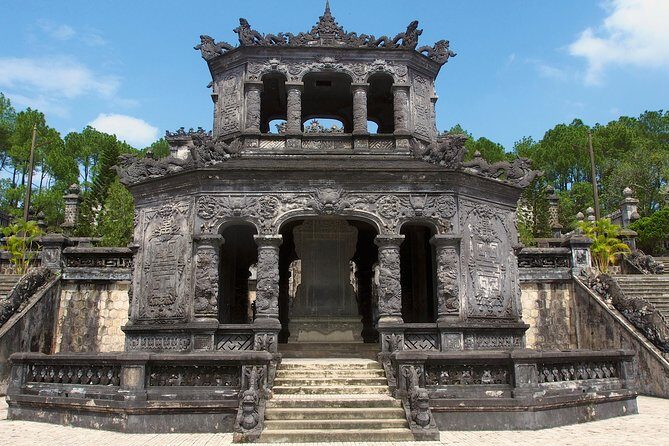
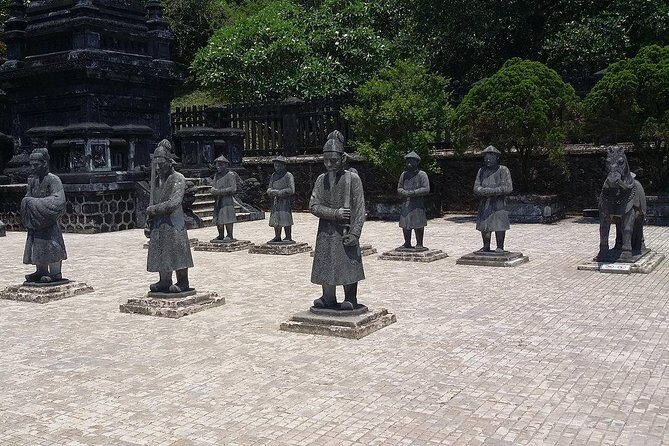
The final major tomb stop is the Tomb of Khai Dinh. This one is described as very elaborate, and the design is where it gets interesting. It brings together multiple architectural trends, including European and Asian influences, plus elements that feel like different eras layered together.
This is a great choice to end the tomb portion of your day because it contrasts with the more strictly imperial, formal approach you likely started with at Minh Mang. Khai Dinh’s tomb helps explain how Hue didn’t just preserve tradition—it also absorbed influences over time.
The visit is about 45 minutes. That’s enough time to see what makes the tomb special without dragging the day longer than you need. If you’re the kind of person who likes to read every plaque and map out your route, you’ll still enjoy it, but you may want to pace yourself so you don’t miss the overview your guide is giving.
Lunch with drinks: A practical reset in the middle of the day
Lunch is included, and it comes with drinks and bottled water. That sounds basic, but it’s a big deal on a day structured around timed sightseeing.
You don’t want to spend your one Hue day bargaining for a meal or trying to figure out what’s open at the right time. Having lunch handled means you can refuel and get back to the next stop without losing momentum.
Because the day is roughly 9 to 10 hours, the lunch break is more than food. It’s also where you reset your energy so the later sites don’t feel like chores.
How the schedule feels in real life (and how to prepare)
This tour runs a full day with four major sites:
- Minh Mang tomb (about 1 hour)
- Imperial City/Citadel (about 2 hours)
- Thien Mu Pagoda (about 40 minutes)
- Khai Dinh tomb (about 45 minutes)
Those sightseeing blocks add up fast, but the tour keeps each stop within a focused time range. That’s the right style for a one-day hit, especially if you’re starting from Hoi An or Da Nang.
Practical prep that pays off:
- Wear comfortable shoes for walking between sites
- Bring sun protection even if the morning starts okay
- Use the lunch time to drink water and cool off
- If you’re sensitive to heat, plan to take a shade break whenever you can
Also, since you’re traveling by private vehicle, you’ll likely have fewer “stop-and-wait” moments than on larger group tours. That helps you stay mentally fresh for the imperial sights.
The guide and driver factor: what makes the day feel easy
The tour is led by an English-speaking guide who points out features of the royal tombs, Thien Mu Pagoda, and the Citadel. In one described experience, the guide named Danny was praised for giving lots of information and teaching the history behind Hue’s older capital status.
That’s exactly what you want from a day like this. Hue can turn into a list of monuments if you don’t have someone connecting the dots. A good guide helps you understand why Minh Mang’s tomb matters first, why the Citadel is arranged the way it is, and why Thien Mu and Khai Dinh feel different but still connected to the same imperial story.
The driver matters too. A smooth, experienced driver makes a long coastal-to-Hue day feel far less tiring, and one write-up also highlights a driver named Voo.
Who should book this Hue culture and history day trip
I’d point you to this tour if you want:
- a guided “greatest hits” day in Hue
- an English-speaking guide to explain the sites clearly
- entrance fees and lunch handled for a smoother schedule
- private, door-to-door transport from Hoi An or Da Nang
It’s also ideal if you don’t want to coordinate multiple tickets, multiple rides, or multiple stops by yourself. If you’re traveling with someone who gets stressed by logistics, this format is a big quality-of-life upgrade.
If you’re the type who loves to roam slowly and make spontaneous detours, a fixed 9 to 10 hour itinerary might feel a bit strict. But for a one-day visit, it’s a strong structure.
Should you book this Hue day tour?
If Hue is on your list and you only have one day, I think this is a smart way to spend it. The value comes from the bundle: private transport, an English guide, entrance fees included, and lunch with drinks and bottled water. That removes most of the common headaches people face on day trips.
Book it if your priority is seeing the core imperial and religious highlights with context, while staying comfortable on the ride from the coast. Skip it only if you’re looking for a long, slow day with lots of freedom to wander and change plans on the fly.
FAQ
How long is the Hue Culture & History day tour?
It runs about 9 to 10 hours.
Where does the tour depart from?
It departs from your pickup location in Hoi An or Da Nang (hotel pickup is included).
What are the main stops during the day?
You’ll visit the Mausoleum of Emperor Minh Mang, the Hue Imperial City (Citadel), Thien Mu Pagoda, and the Tomb of Khai Dinh.
Is lunch included?
Yes. Lunch with drinks and bottled water is included.
Are entrance fees included?
Yes. Entrance fees are included for the tour stops.
Is cancellation allowed?
You can cancel for a full refund up to 24 hours in advance.