REVIEW · DA NANG
Free E-sim Da Nang: Instagram Half-Day Tour with Local Guide
Book on GetYourGuide →Operated by MyProGuide Vietnam · Bookable on GetYourGuide
Da Nang hits different when you cover it with a local guide and a tight half-day plan. I like how this tour mixes big photo landmarks with real culture, including the Da Nang Museum of Cham Sculpture and the neighborhood energy of Han Market. You also get built-in time for the modern wow-factor at Dragon Bridge and the Carp-Dragon Statue.
My favorite part is the variety: park and architecture for calm moments, then markets for everyday life. One possible drawback to consider is that communication and pacing can vary; one guest flagged the guide’s English as a challenge during rainy weather, even though the guide tried hard.
In This Review
- Key Tour Takeaways (What You’ll Actually Get)
- Half-Day Da Nang: Why This Photo-Heavy Tour Works
- APEC Park Start: Set the Tone for Da Nang
- Da Nang Museum of Cham Sculpture: Champa Art Without the Guesswork
- Dragon Bridge and Carp-Dragon Statue: Big Da Nang Energy for Photos
- Da Nang Cathedral: Architectural Contrast and a Breather
- Han Market: Local Life, Easy Browsing, and Real Da Nang Color
- Price and Value: Is $32 a Good Deal?
- What to Bring (So the Tour Feels Easy, Not Hectic)
- English-Guide Reality Check: When It Matters
- Who Should Book This Tour (And Who Might Want a Different Plan)
- Should You Book This Da Nang Half-Day Instagram Tour?
- FAQ
- How long is this tour?
- What sites are included?
- Is the tour available in English?
- Is hotel pickup and drop-off included?
- What’s included in the price?
- What’s not included?
- What should I bring?
- Is the tour suitable for wheelchair users?
Key Tour Takeaways (What You’ll Actually Get)
- APEC Park to Han Market: a smart mix of calm, history, and street-level color in one half-day loop
- Cham Museum time: you’ll see ancient Champa artifacts up close, not just take photos outside
- Dragon Bridge + Carp-Dragon Statue: major Da Nang icons with clear photo opportunities
- Da Nang Cathedral: a quieter architectural stop that adds contrast to the city scenes
- English-speaking guide: the tour lists English, and at least one named guide is praised for being very informative
Half-Day Da Nang: Why This Photo-Heavy Tour Works
This is a half-day tour designed for people who want to get their bearings fast in Da Nang. You’re not wandering randomly across town. You’re moving stop to stop with a local guide who can explain what you’re seeing, so your photos come with context.
For $32 per person, the value is mainly in the structure. Entrance fees to all listed stops are included, along with bottled water and a professional local guide. If you select it, hotel pickup and drop-off also take the hassle out of logistics.
One small thing to flag: the tour is marketed with an e-sim mention in the name, but it isn’t listed in the inclusions. I’d treat that as a bonus if it’s confirmed at booking, not as a guaranteed part of what’s covered.
You can also read our reviews of more guided tours in Da Nang

APEC Park Start: Set the Tone for Da Nang
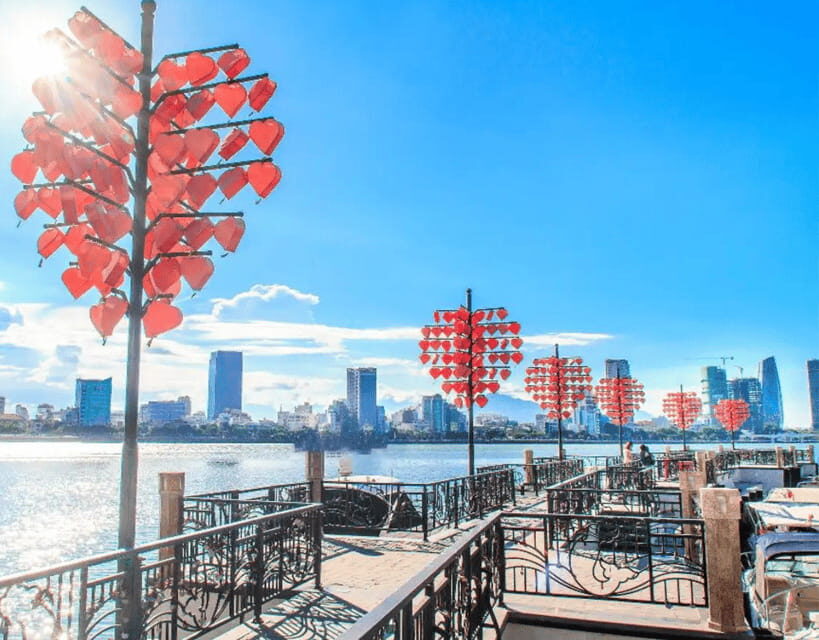
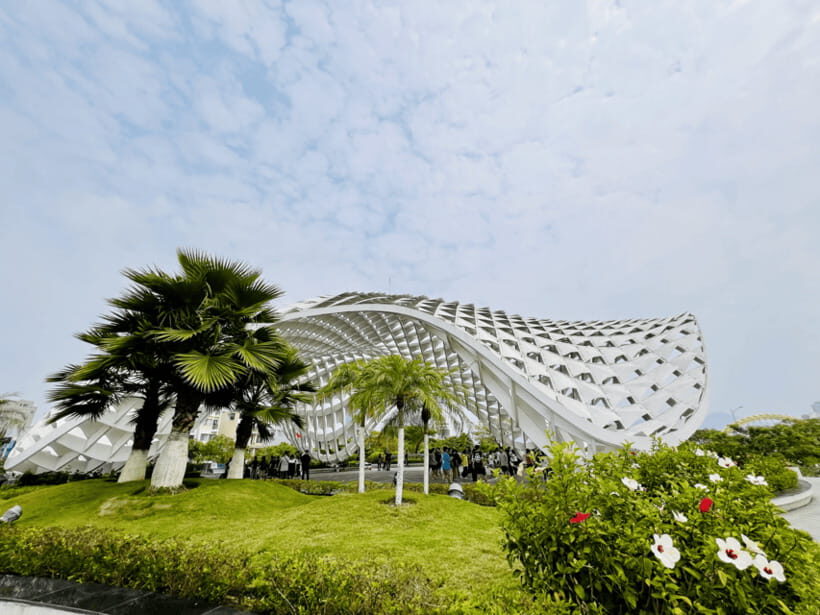
APEC Park is a strong first stop because it gives you an open-air sense of the city right away. In the early part of the day, parks like this are easier on your legs than back-to-back temple or museum hours. You can also adjust your camera settings and pacing before the more crowded-feeling areas later.
What I like about starting with a park is the mood shift. Da Nang isn’t only about monuments. It’s also about public spaces and how people move through them. Even if you’re mainly here for photos, the calmer start helps you see the city’s rhythm.
If weather is rainy, the park can feel more slippery and gray. The good news: the tour is still built around multiple stops, so you won’t lose an entire half-day to one outdoor location.
Da Nang Museum of Cham Sculpture: Champa Art Without the Guesswork
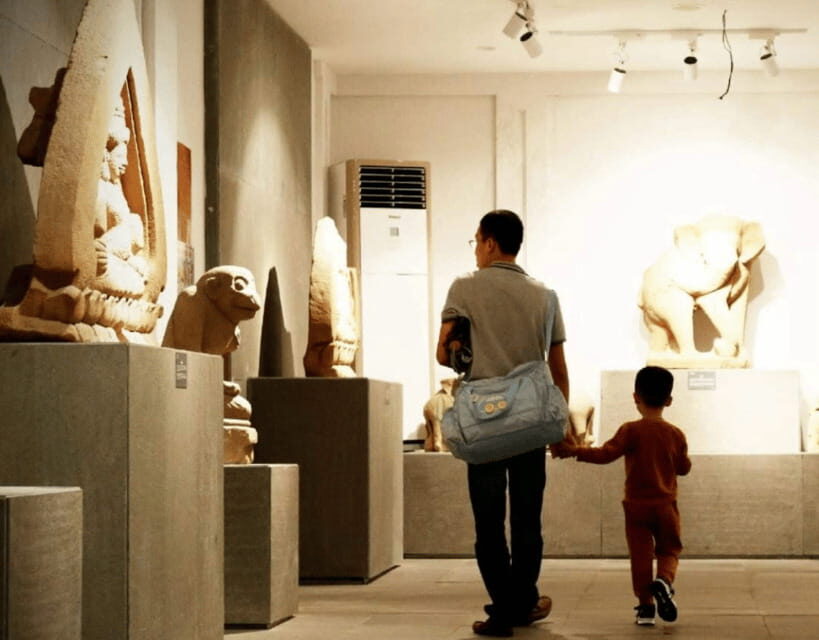
Then you shift into the heart of cultural learning at the Da Nang Museum of Cham Sculpture. This is one of the most meaningful stops on the route because you’re not just seeing Da Nang icons—you’re seeing the artifacts that shaped central Vietnam’s story.
This museum stop matters for two reasons. First, it focuses on ancient Champa artifacts, which adds depth to all those exterior photo stops later. Second, it’s a controlled indoor environment. When the weather turns, you don’t have to abandon the plan.
You’ll want to pay attention to how the guide frames what you’re looking at. One guest praised a guide named Ngo Van Troung for being very informative and for showing clearly what was on the itinerary. That kind of guidance helps you understand the difference between an impressive sculpture and a meaningful one.
Practical tip: bring your camera, but also slow down. Museums are where you’ll get the most out of explanations, and it’s easy to rush if you’re chasing shots.
Dragon Bridge and Carp-Dragon Statue: Big Da Nang Energy for Photos
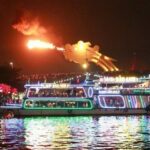
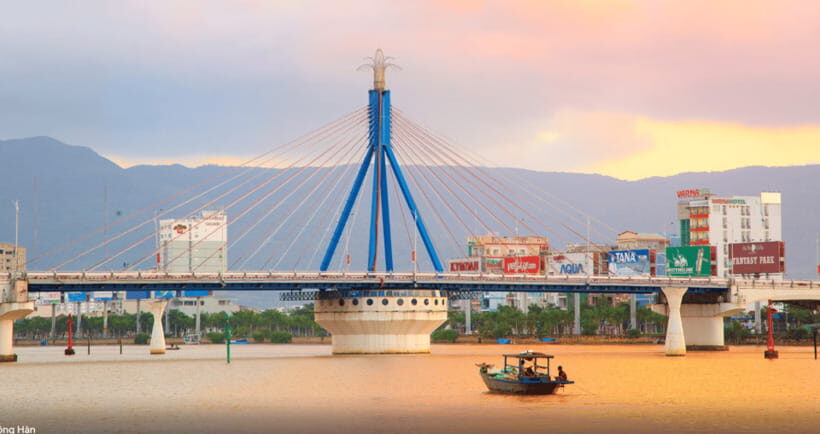
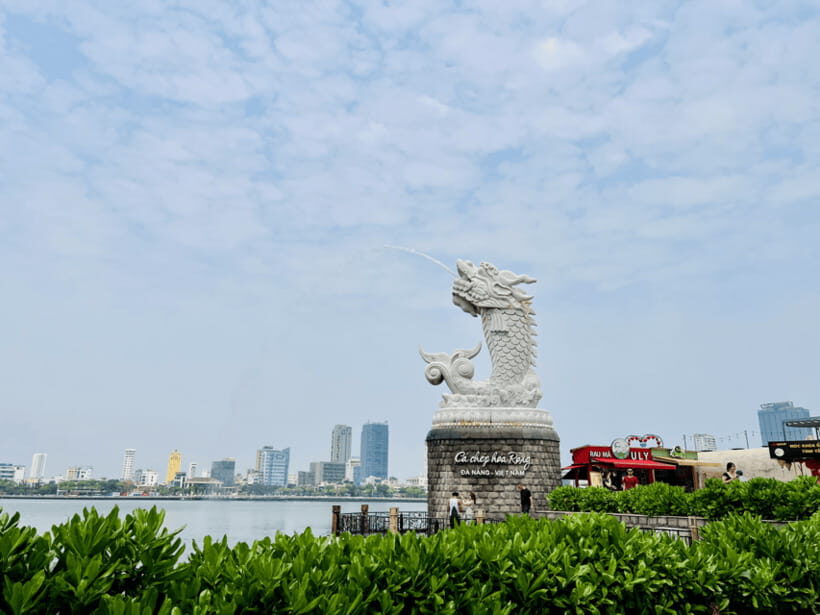
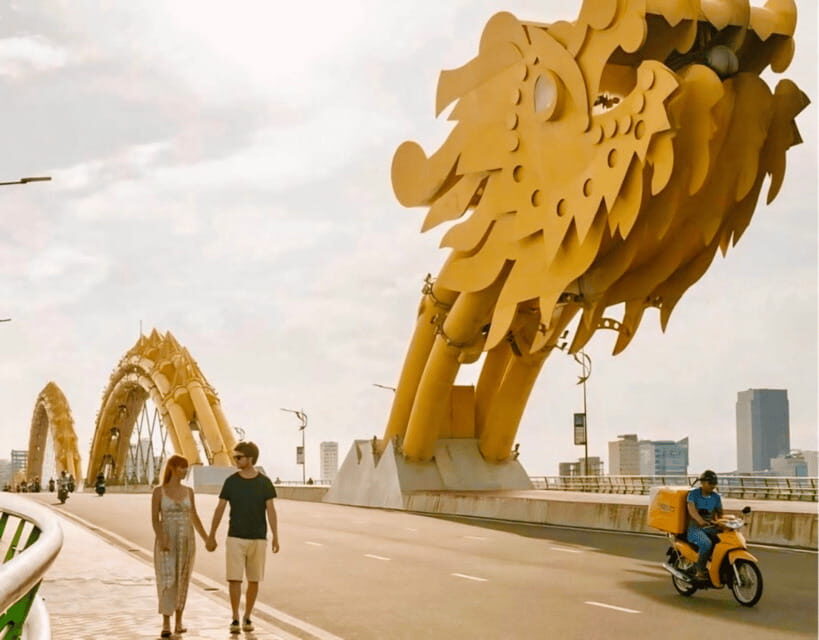
From the museum, you move into the city’s modern landmarks, and the switch is quick. The Dragon Bridge and the Carp-Dragon Statue are both designed for recognition—when you see them, you know you’re in Da Nang.
These stops are ideal if you’re traveling with a camera and want a “wow” moment that still feels local. The Dragon Bridge is the kind of landmark people photograph from multiple angles, and the Carp-Dragon Statue adds a complementary theme that ties into Da Nang’s identity.
What I like here is that it’s not just standing and taking one picture. You can walk around and adjust your framing because the tour builds in time for these icons rather than treating them like a drive-by.
Weather note: even in light rain, you’ll often still get good shots because landmarks don’t require you to be dry to appreciate them. Just watch your footing and keep your gear protected.
Da Nang Cathedral: Architectural Contrast and a Breather
After all the dramatic city symbols, Da Nang Cathedral adds a different texture. It’s a religious site and an architectural stop, which means you’ll likely have a calmer pace here than at the bridge and statue viewpoints.
This part of the tour works well as a reset for your brain and your legs. You’re moving from modern landmark energy to a place where quiet behavior and respectful attention matter. If you tend to overpack your days, this stop is a nice balance.
Because the tour includes entrance fees to the listed sites, you’re not stuck figuring out what costs extra. That lets you spend mental energy on observation instead of logistics.
Practical tip: wear light clothing and comfortable shoes. Cathedral areas often involve walking on uneven surfaces and taking your time for photos.
You can also read our reviews of more tours and experiences in Da Nang
Han Market: Local Life, Easy Browsing, and Real Da Nang Color
The day ends with Han Market, and that’s exactly the right move for a half-day. Markets are where you see what life looks like between the monuments. Even if you don’t plan to shop, Han Market is a strong sensory experience.
This stop is also built for practical travelers. You can browse quickly if you’re short on time, or linger if the area grabs you. The tour highlights it as a traditional market with local life and plenty of color, and that’s the point: you’ll get a slice of everyday Da Nang rather than only the headline sights.
A good way to approach Han Market is to treat it like a photo and people-watching stop. You can capture signs, stalls, and the flow of shoppers without needing to commit to purchases.
What to watch: markets are active, so keep your valuables secure and move with purpose. If you’re hungry, you can look for snacks, but meals are not included on this tour, so plan to buy something on your own if you want to eat.
Price and Value: Is $32 a Good Deal?
At $32 per person, the value mostly comes from what’s included and what it saves you from. You’re paying for:
- a professional local guide
- entrance fees to all listed sites
- bottled water
- hotel pickup and drop-off if you choose that option
For a half-day, that combination is usually more cost-effective than trying to self-plan the same mix of stops with guides and multiple ticketed locations. You also get an order that makes sense: start scenic and open-air, move into cultural learning, then end with modern icons and market life.
Where value can drop a bit is if you’re the type who hates group pacing or needs perfect communication in English. Since English is listed but can vary in clarity, I’d go into it with patience and a basic travel attitude: look, ask simple questions, and use your eyes as your guide when words are tricky.
What to Bring (So the Tour Feels Easy, Not Hectic)
Because this is a walking-focused half-day, your success depends on comfort. Wear comfortable shoes and light clothing. Bring sunscreen and a hat, since the tour notes sun protection as a must and you’ll likely be outside at multiple stops.
Also bring water. Bottled water is included, but it’s still smart to have your own bottle too, especially if the weather is hot or you’re shooting photos for long stretches.
Camera time is part of the whole appeal here. Bring your camera and be ready to stop often. A tour like this is built around photo opportunities, so you’ll likely want to capture more than one angle at the bridge and cathedral.
If you’re sensitive to rain, pack a light layer. The tour notes varying weather conditions, and even a short rain can slow your pace and make outdoor stops less comfortable.
English-Guide Reality Check: When It Matters
The tour is listed as English-speaking, and one guest specifically praised Ngo Van Troung for being very good and informative. That’s a great sign, because when the guide explains what you’re seeing, your time feels less like a checklist.
At the same time, another guest flagged a real challenge with English comprehension and said the overall process felt a bit uncoordinated, especially in rainy weather. That doesn’t mean the tour is bad—it means you should approach with flexibility.
My practical advice: if you care about detailed explanations, plan to ask short questions at each stop. Even when English is limited, guides can usually point you to the right things to focus on, and you can lean on body language and visuals.
Who Should Book This Tour (And Who Might Want a Different Plan)
This tour is ideal if you want:
- a half-day outline of Da Nang’s key cultural and modern spots
- photo-friendly landmarks plus at least one meaningful indoor culture stop
- an easy way to cover multiple locations without planning transport between them
It’s not a fit if you have mobility issues. The tour explicitly notes it isn’t suitable for people with mobility impairments or for wheelchair users. You’ll be on your feet and moving between sites.
If you’re traveling solo, a couple, or with friends and you want a structured route with a local guide, this matches that style well. If you hate being on a schedule, you might find the pacing a bit tighter—especially if weather slows things down.
Should You Book This Da Nang Half-Day Instagram Tour?
Yes, I think it’s worth booking if you want a guided mix of landmarks and culture without spending your morning figuring out tickets and routes. The biggest reason is the stop balance: APEC Park for atmosphere, the Champa museum for substance, Dragon Bridge and the Carp-Dragon Statue for iconic photos, then Han Market for local life.
Book it with eyes open if you’re very sensitive to English clarity or if you’re traveling during unpredictable weather. In those cases, bring patience, keep your expectations flexible, and focus on the visuals while you still enjoy whatever explanation you get.
If you want a one-visit snapshot of Da Nang that feels thoughtful rather than random, this half-day tour is a solid choice.
FAQ
How long is this tour?
It’s a half-day tour.
What sites are included?
The tour includes APEC Park, Da Nang Museum of Cham Sculpture, Dragon Bridge, Carp-Dragon Statue, Da Nang Cathedral, and Han Market.
Is the tour available in English?
Yes, English is listed as the tour language.
Is hotel pickup and drop-off included?
Hotel pickup and drop-off are included if you select that option.
What’s included in the price?
The price includes a local guide, entrance fees to all sites, and bottled water.
What’s not included?
Meals and personal expenses are not included.
What should I bring?
Bring comfortable walking shoes, a camera, sunscreen, and water. A hat is also recommended to protect from the sun.
Is the tour suitable for wheelchair users?
No. It’s not suitable for wheelchair users or people with mobility impairments.