REVIEW · COOKING CLASSES
Home Cooking Class: Market, Garden and cooking 4 dishes
Book on Viator →Operated by Da Nang Home Cooking Class · Bookable on Viator
Home cooking in Da Nang feels personal fast. You’ll move from Han Market shopping to a family home kitchen, with Vietnamese coffee and four hands-on dishes in between.
I especially like the small-group pace—up to 10 people means real help instead of standing in line. And I really like that you learn by doing: you cook, then eat what you make.
One watch-out: part of the day includes farm time, so the activity is weather-dependent, and schedules can shift if conditions are poor.
In This Review
- Key points to know before you go
- From market to meal: why this Da Nang cooking class works
- Han Market start: choosing ingredients that taste like Da Nang
- The garden and farm time: hands-on flavor education
- Quick stop at Da Nang Cathedral: a calm breather on the way
- Vietnamese coffee and tea tasting: the breaks that keep you focused
- Cooking in a local home: four dishes you make and eat
- Pick your menu day: what you’ll cook
- Menu for Mon, Wed, Fri, Sun
- Menu for Tue, Thur, Sat
- A note on the instructor names
- The four-hour rhythm: timings that actually feel workable
- Pickup and what to expect with transportation
- The value question: why $26 can feel like a bargain
- Who this is best for (and who should think twice)
- Practical tips to get the most out of the class
- Should you book this home cooking class in Da Nang?
- FAQ
- How long is the cooking class?
- What does the $26 price include?
- How many people are in the group?
- Where do I get picked up?
- Is drop-off included?
- What dishes will I cook?
- Are the recipes provided in English?
- Do I need to speak Vietnamese to follow the class?
- What if the weather is bad?
- Can I cancel for free?
Key points to know before you go
- Small group (up to 10): more attention from your English-speaking instructor and less waiting around.
- Han Market ingredient hunt: you choose fresh items before you cook, not after.
- Garden/farm activity: you get a practical look at how vegetables actually grow here.
- Four-dish hands-on class: you’re not just tasting—you cook and eat a full meal.
- English recipes included: step-by-step guidance you can take home.
- Vietnamese coffee (and dessert): plan on a few tasty breaks along the way.
From market to meal: why this Da Nang cooking class works
Da Nang is a city with great beaches, yes. But the fast way to understand the local food is to follow ingredients from source to stove. That is what makes this class smart. You start out selecting produce and proteins at a local market, then you spend time with the people who grow vegetables before heading into a home kitchen to cook four classic dishes.
I like that the day is built around process, not performance. You’ll tour ingredients first—so when you start cooking, you understand what matters: freshness, flavor, and how locals balance sauces, herbs, and texture. I also like that the group is kept small. In a group this size, an instructor can actually correct your technique and explain what you’re doing, instead of rushing you through.
The class also keeps it grounded. This isn’t a demo where you watch and nod. You get hands-on practice and you eat your food when it’s ready. That makes the whole thing feel like a real meal with lessons, not a souvenir workshop.
You can also read our reviews of more shopping tours in Da Nang
Han Market start: choosing ingredients that taste like Da Nang
The day’s first stop is Han Market. This is where the experience earns its value. You’re not just walking around looking. You’re selecting ingredients with a guide who pays attention to quality and authenticity, then connecting those choices to what you’ll cook later.
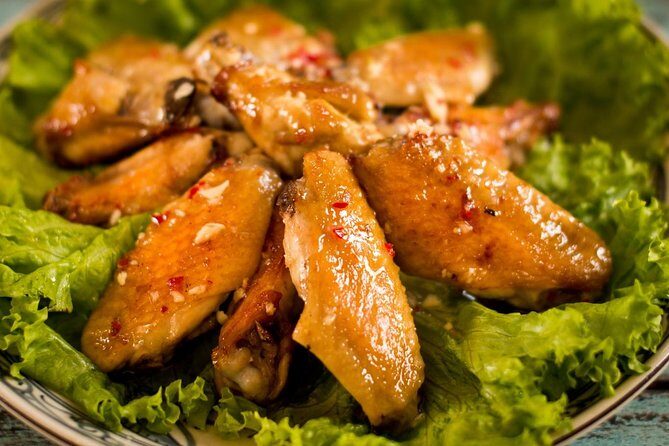
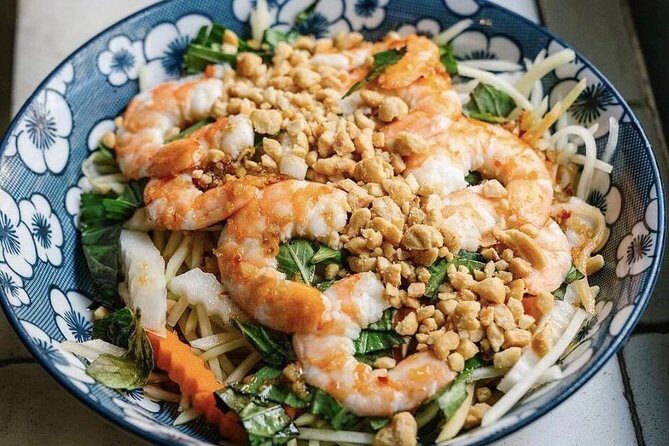
What you’re learning here is simple and useful: how Vietnamese cooking starts with ingredient thinking. In practice, you’ll see how different produce and proteins are chosen for specific dishes—especially when the menu includes things like papaya or mango salads, shrimp, fish sauce-based chicken wings, and spring rolls.
Even if you don’t know the names of every ingredient, you’ll leave with a sense of what to look for next time you cook. And if you like food markets, this stop is fun because it’s practical. It gives you a route in your head: market → kitchen → finished plate.
One practical tip: wear comfortable shoes. Markets are where you rack up steps quickly, and you’ll want to keep your energy for the cooking part.
The garden and farm time: hands-on flavor education
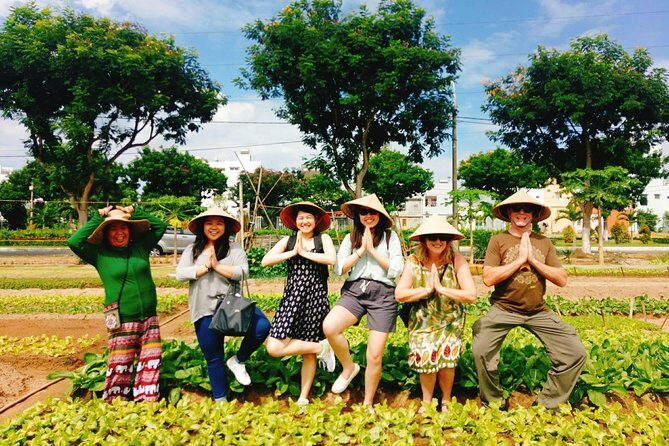
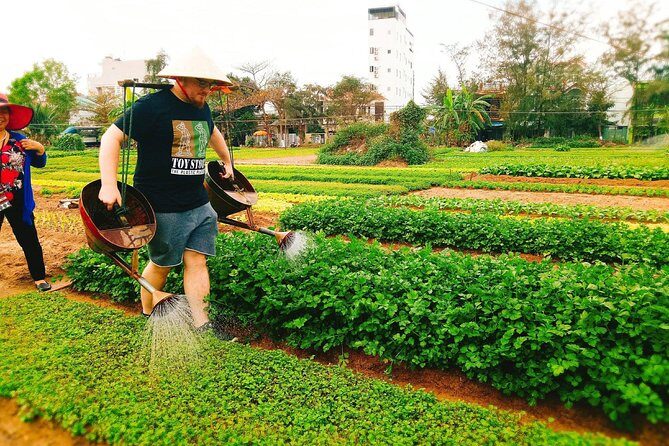
After the market, the itinerary shifts to farm and garden time. You join locals with tasks tied to preparing land and growing vegetables. It’s not positioned as heavy labor. It’s more like a short, honest working visit—enough to see what goes into the fresh items you just chose.
This matters because Vietnamese flavors are tightly connected to herbs, greens, and produce. When you’ve seen the work behind the vegetables, you notice more on your plate. You’ll also understand why certain flavors feel so clean and bright—especially in the salad dishes that appear on multiple menus.
You’ll also get a perspective that city life usually hides. The class quietly nudges you from eating as a tourist to eating as someone who understands sourcing. That’s the kind of knowledge you can use after the tour when you’re buying groceries back home.
Quick stop at Da Nang Cathedral: a calm breather on the way
There’s also a stop at Da Nang Cathedral during the route. Think of it as a brief reset between activities. It’s useful for breaking up the day so you don’t go straight from market to farm to kitchen with no pause.
You don’t need to treat it like a major sightseeing day. If you’re short on time in Da Nang, it’s the kind of added stop that still gives you a sense of place without eating up your full itinerary.
Vietnamese coffee and tea tasting: the breaks that keep you focused
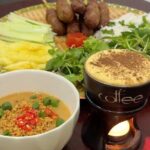
At some point you’ll get to taste Vietnamese coffee, and there’s also a tea tasting included. These breaks aren’t just for flavor. They help you slow down and pay attention while you’re mentally switching from shopping to cooking.
Vietnamese coffee is a key food culture signal here. It’s part of everyday rhythm, not a rare treat. Pair that with the garden and market context, and you start to see how meals are built in layers: drink, snack, main dishes, then dessert.
Speaking of dessert, it’s included. No need to guess what comes next—you’ll get a sweet finish as part of the overall pacing of the class.
You can also read our reviews of more tours and experiences in Da Nang



Cooking in a local home: four dishes you make and eat
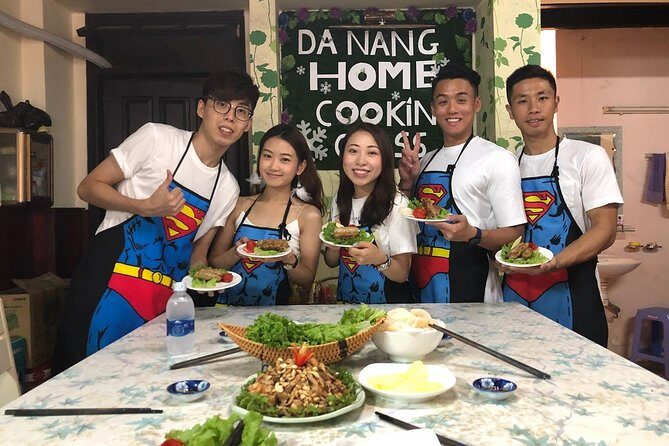
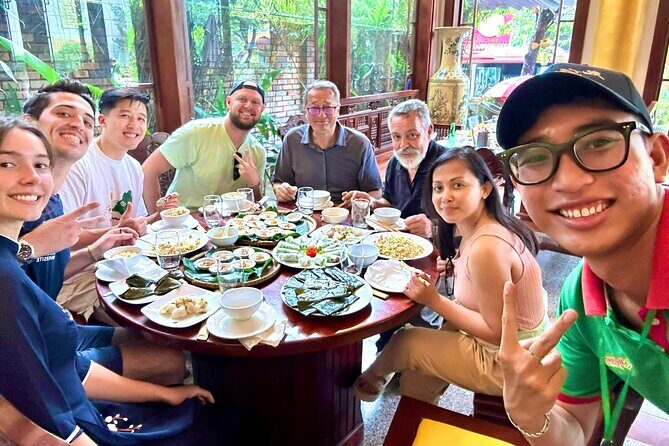
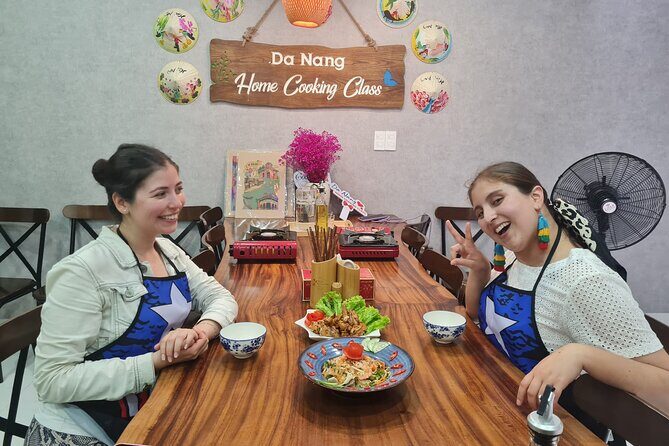
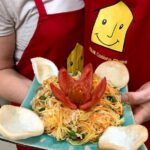
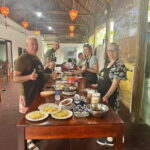
This is where the experience becomes real. You move into a local house and cook four traditional dishes. The instructor teaches, but you’re also working with your hands through each dish.
Two details make this portion especially good. First, you get English recipe copies, so you can follow along and take notes for later. Second, the instructor is English speaking, and the smaller group size gives you a better chance to ask questions without shouting over a crowd.
In the cooking sessions I’ve seen people enjoy most, the magic isn’t complicated technique. It’s the clarity of instructions and the chance to practice multiple components—salads, rolls, pancakes, noodles—within one afternoon.
And yes, you eat what you cook. That’s a big difference from classes where you sample tiny bites and then leave hungry. Here, you build a meal around what you made.
Pick your menu day: what you’ll cook
The menu depends on the day, so check your dates before you book. Here are the two menu sets.
Menu for Mon, Wed, Fri, Sun
You’ll cook:
- Quang noodle
- Fish sauce chicken wing
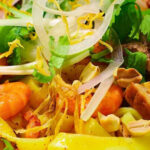
- Green papaya salad with shrimp
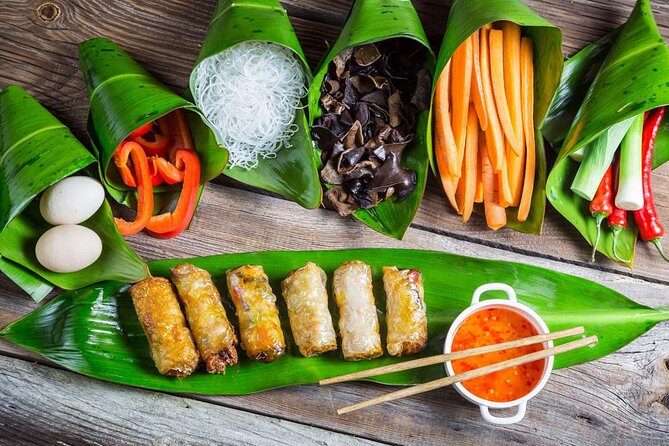
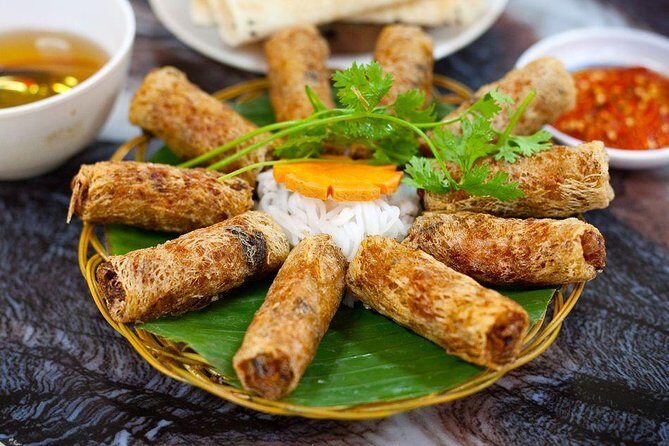
- Deep-fried spring rolls
This set leans into a great mix of textures: a noodle dish, savory wings, crunchy fresh salad, and fried spring rolls. If you love contrast—cool and tangy next to hot and crispy—this lineup tends to satisfy.
Menu for Tue, Thur, Sat
You’ll cook:
- Beef noodle soup
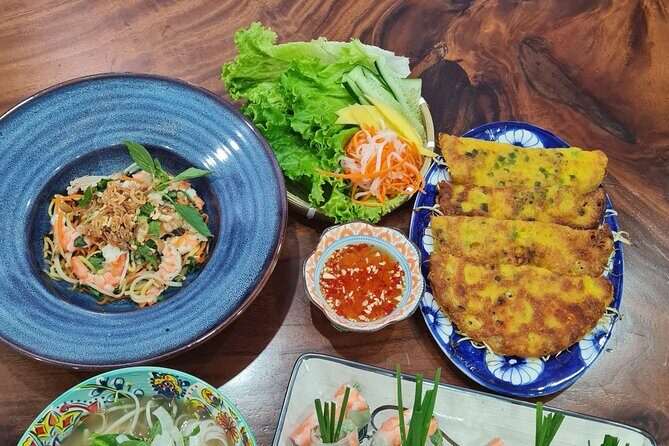
- Crispy Vietnamese Pancakes (Banh Xeo)
- Green mango salad with shrimp
- Fresh spring roll
This lineup changes the mood a bit. You get comfort in the noodle soup and a fun cooking target with Banh Xeo. Then you balance it with mango salad and fresh spring rolls—fresh, not heavy.
A note on the instructor names
Based on past sessions, different instructors lead the cooking. You may be guided by people like Jane, Lyn, or Nhi (and others mentioned in past groups). What stays consistent is the approach: step-by-step teaching, patience, and lots of hands-on practice.
The four-hour rhythm: timings that actually feel workable
The experience is about 4 hours. That length is short enough to fit into a busy Da Nang itinerary, but long enough to include multiple activities: market, farm/garden, cooking class, and eating.
There are typically two time windows:
- Morning pickup around 8:00–8:30
- Afternoon pickup around 2:00–2:30
You head to the house for cooking around 9:15 or 3:15, based on the session. Lunch is cooked for the morning group, and dinner is cooked for the afternoon group. The day ends around noon or early evening, depending on the start time.
Why this matters to you: you’ll be hungry at the right moment. The tour doesn’t stretch into a full day where you’re constantly snacking. It moves you from ingredient selection to cooking, then into a proper meal you control.
Pickup and what to expect with transportation
Pickup is offered from Da Nang center hotels when you choose the full option. You’ll meet your local guide at your hotel, and you’ll use a mobile ticket.
Drop-off service isn’t included. If you’re booking expecting door-to-door return, plan to arrange your own way back after the tour. Also note that pickup and drop-off may depend on which portion you choose (the cooking class versus a fuller tour option), so it’s worth confirming what your selected package includes.
This doesn’t make the experience harder—Da Nang is manageable—but it does change your planning. I recommend you keep your next commitment flexible for the end of the tour.
The value question: why $26 can feel like a bargain
At $26 per person, you’re paying for a lot more than a cooking class. You’re paying for market time, farming/garden activity, an English-speaking instructor, ingredients, recipe sheets in English, water, plus coffee/tea and dessert.
Food tours can be expensive when they’re mostly walking and photos. Here, you’re cooking and eating. You’ll leave with something you can recreate—at least at the level of ingredients and sequence—because you get the recipes.
That combination is why the price tends to land well. You’re not paying for a show. You’re paying for a working meal plus a lesson tied directly to ingredients you picked and produce you saw growing.
Who this is best for (and who should think twice)
This class is ideal if you want:
- a hands-on Vietnamese cooking experience in a small group
- real food culture via market shopping and garden/farm time
- a meal that includes multiple dishes, not just one plate
- English recipe support so you can try again later
It’s also a great fit for couples, friends, and even moms-daughters style trips, because it’s social without being chaotic.
Who might hesitate? If you prefer long, slow sightseeing with lots of free time, the tight four-hour structure can feel a bit scheduled. Also, since there’s weather-dependent outdoor farm/garden time, people with very inflexible plans should consider booking with some buffer.
Practical tips to get the most out of the class
You’ll enjoy this more if you show up ready to work, not just watch.
- Wear comfortable shoes for market and walking between stops.
- Bring a light layer. Even in warm seasons, home kitchens and morning/afternoon transitions can feel different.
- Come hungry. You’re cooking four dishes and then eating them, so treat it like your real meal.
- Ask questions early. In a small group, you get better answers if you speak up while the instructor is teaching each dish.
- Be ready for messy fun. Vietnamese cooking includes salads, rolls, and fried elements, so you’ll likely get small splatters and flouring-type clean-up moments.
Should you book this home cooking class in Da Nang?
Book it if you want a Da Nang food experience that feels practical and personal: market shopping, garden time, and then real cooking with an English-speaking instructor. The small group size makes it easier to learn, and the fact that you cook four dishes you eat is the big value driver for the money.
Skip it only if you can’t handle a schedule that moves quickly, or if your plans can’t flex in case weather affects outdoor farm/garden time. If your goal is to understand Vietnamese flavors in a way you can actually repeat, this is a strong choice.
FAQ
How long is the cooking class?
It runs about 4 hours.
What does the $26 price include?
You get the market tour, farming/garden activity, water, ingredients for the dishes, English recipe copies, an English-speaking instructor, Vietnamese coffee (and tea tasting), and dessert. Lunch or dinner is cooked and enjoyed by you.
How many people are in the group?
The experience is capped at a maximum of 10 travelers (and it’s described as a small group of up to 9 in the experience highlights).
Where do I get picked up?
Pickup is offered from hotels in Da Nang center with a local guide.
Is drop-off included?
Drop-off service is not included.
What dishes will I cook?
You cook four dishes, and the menu depends on the day. Some days include Quang noodle, fish sauce chicken wing, green papaya salad with shrimp, and deep-fried spring rolls. Other days include beef noodle soup, crispy Banh Xeo, green mango salad with shrimp, and fresh spring rolls.
Are the recipes provided in English?
Yes, you receive copies of the recipes in English.
Do I need to speak Vietnamese to follow the class?
No. The instructor is English speaking.
What if the weather is bad?
The experience requires good weather. If it’s canceled due to poor weather, you’ll be offered a different date or a full refund.
Can I cancel for free?
Yes. You can cancel up to 24 hours in advance for a full refund.