REVIEW · COOKING CLASSES
5 traditional dishes Da Nang cooking class with market trip
Book on Viator →Operated by Apron Up Cooking Class · Bookable on Viator
Five dishes, one market, and serious comfort food.
This Da Nang cooking class pairs a real food market stop at Chợ Bắc Mỹ An with a hands-on session in a home-style kitchen, so you’re not just copying steps—you’re learning what goes into Central Vietnam cooking. I love the practical flow: you shop for ingredients first, then cook with the same items in your hands. I also love the mix of famous dishes on the menu, from bun bò Huế to crispy bánh xèo, with a sweet ending like Da Nang avocado ice-cream (or a vegetarian version). One thing to keep in mind: the kitchen is busy, and at least one dish may be a shared group effort, with shared plating that can feel a bit crowded.
The vibe stays light because the instructors teach the why, not just the how. I’ve seen instructors named Bora, Chi, Blue, and Jenny pop up across classes, and they’re consistently described as patient and good at explaining techniques (especially for families and kids). If you want a completely private, no-wait, every-person-only setup, this isn’t that kind of class—but for learning, tasting, and leaving with a recipe book, it’s a strong value.
In This Review
- Key highlights to know before you go
- A 4-hour Central Vietnam lesson you can actually repeat
- Start in Chợ Bắc Mỹ An: shopping like a local (with a purpose)
- The kitchen setup: meeting point, small groups, and real instruction
- The 5 dishes you’ll cook, and what each one teaches
- 1) Bun bò Huế
- 2) Bánh xèo
- 3) Tàm hũu fresh roll
- 4) Young jackfruit salad
- 5) Da Nang avocado ice-cream (or vegetarian version)
- What you eat: the real reward, not just a snack
- Recipes and a certificate you’ll actually use
- Price and value: why $39 is more than you think
- Who this class is perfect for (and who should choose something else)
- Tips to get the most out of your 4 hours
- Should you book this Da Nang cooking class?
- FAQ
- FAQ
- What dishes are included in the Da Nang cooking class menu?
- Do I visit a market before cooking?
- How long is the cooking class?
- What is the meeting point for the class?
- Does the class include food to eat?
- Can the menu be adjusted for dietary needs?
- How big are the groups?
- Do I need a printed ticket?
- Is there free cancellation?
- What if the minimum number of travelers is not met?
- Are service animals allowed?
Key highlights to know before you go
- Chợ Bắc Mỹ An market stop so you learn ingredients before you cook
- 5-dish hands-on menu that hits big Central Vietnam favorites
- Diet flexibility, including vegetarian adaptation for the avocado ice-cream
- Small-group feel (even though the cap is 30 travelers) with plenty of attention
- Cookbook + certificate so you can recreate it back home
A 4-hour Central Vietnam lesson you can actually repeat
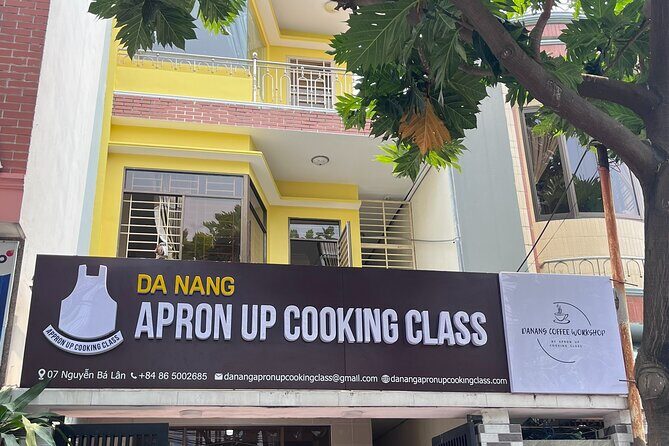
This class runs about 4 hours, starting with a meet-up at 07 Nguyễn Bá Lân, Bắc Mỹ An, Ngũ Hành Sơn, Đà Nẵng. You show up around 10 minutes early (it helps to avoid rushing), and the day moves quickly: market, kitchen, cook, eat, pack up with your notes.
The reason this works is simple. Food classes often start at the stove with no context. Here, you build context first—what you’re buying, what it’s called locally, and what it’s used for. By the time you’re cooking, you’re not guessing. You’re making decisions.
You can also read our reviews of more shopping tours in Da Nang
Start in Chợ Bắc Mỹ An: shopping like a local (with a purpose)
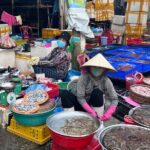
The first stop is Chợ Bắc Mỹ An, a local market where you can see the ingredients used for Central Vietnam flavors. Instead of generic instruction like add this, mix that, you’re guided to buy what your dishes need.
What’s useful for you: markets teach portioning and ingredient quality fast. In a place like this, you’ll notice differences in things you can’t “see” in a supermarket—freshness, texture, and how ingredients are grouped and sold. That matters for dishes where a thin margin makes the result work, like bánh xèo batter consistency or the balance in a fresh roll.
Also, the market gives you something extra even if you’re not a foodie. It’s a quick, real slice of daily life—colorful produce, local shopping rhythm, and plenty of opportunities to ask questions like why one herb matters more than another.
The kitchen setup: meeting point, small groups, and real instruction
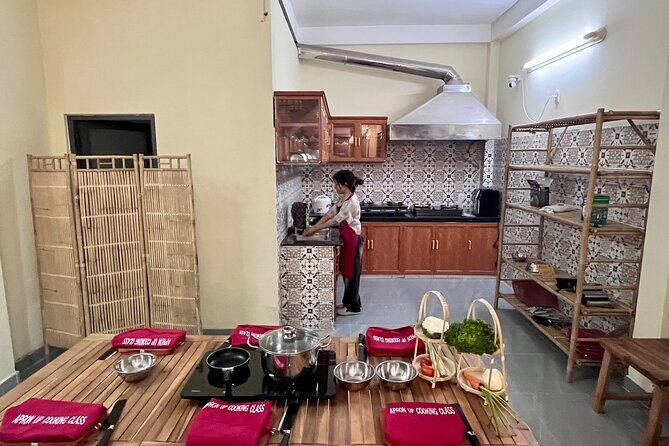
After the market, you return to the cooking space. Expect it to be more active than a typical cooking studio—people are working, sharing prep stations, and moving between cooking tasks.
The operator caps the group at 30, but what matters more for your experience is how many people you’re actively working alongside. Some classes have been run with a smaller feel (one group of six was mentioned), which is where you get better personal coaching. Either way, the teaching style is described as patient, and families with kids have had success because the instructors keep things clear and hands-on.
If you’re the type who learns by doing, this setup suits you. If you hate busyness, plan to stay flexible: the class is working-factory style, not a quiet demo.
The 5 dishes you’ll cook, and what each one teaches
You’ll cook 5 dishes from a set menu. The exact balance can be adjusted to meet dietary requirements, and the sweets can switch to a vegetarian version.
Here’s what’s on the standard menu:
1) Bun bò Huế
This is beef noodle soup from Hue, and it’s a great pick because it teaches seasoning balance. Even if you’re not aiming to recreate the whole depth of broth on your first try, you’ll learn how Central flavors are layered.
You can also read our reviews of more tours and experiences in Da Nang

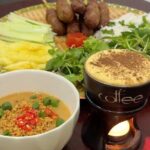
2) Bánh xèo
Bánh xèo is the crispy Vietnamese “sizzling pancake,” and it’s one of the most teachable dishes. Cooking it well depends on heat control and batter texture. One reason this class is so satisfying: you learn how to get it browned and crisp rather than pale and soggy.
3) Tàm hũu fresh roll
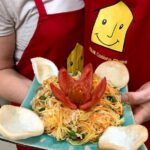
This is a fresh roll featuring herbs and filling wrapped in rice paper. Fresh rolls sound easy until you handle rice paper—then you realize timing matters. It’s the kind of dish where careful rolling makes the difference between a neat roll and one that tears or falls apart. You’ll get guidance so you’re not wrestling blindly.
4) Young jackfruit salad
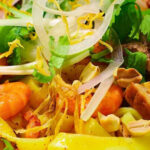
This dish is all about crunch and balance—sweet, sour, and a little spicy depending on how it’s built. Learning it in class helps you understand why Central Vietnamese salads aren’t just “salads.” They’re flavor systems.
5) Da Nang avocado ice-cream (or vegetarian version)
The sweet finish is a win because it turns the whole experience from lunch cooking into a full Da Nang moment. If you’re vegetarian, the class offers a vegetarian adaptation for the avocado ice-cream.
What you eat: the real reward, not just a snack
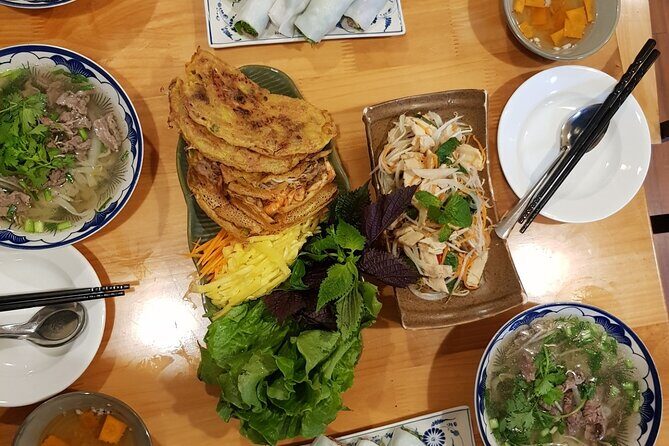
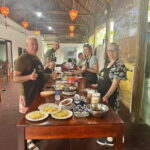
After cooking, you eat what you made. You’ll have the dishes plus fruits, and rice vodka is included.
That combination is more than tradition—it’s a full loop. You cook, you taste, you understand. And when you taste the soup, pancake, roll, salad, and the ice-cream side by side, you start to see how Central Vietnam works as a system: savory + crisp + fresh + sharp + sweet.
One practical note: because it’s a group cooking setup, plating might involve some shared serving. If you prefer a strictly individual “my dish, my plate, no overlap” style, this is the main area where people can feel a bit of friction in an otherwise friendly experience.
Recipes and a certificate you’ll actually use
You get a cookbook plus a certificate at the end. That sounds like a formality, but it changes how you remember the class.
In my experience, most cooking classes fail at the last step: you leave with photos, but no reliable instructions. Having a printed cookbook helps you recreate the dishes with less guesswork—especially for recipes like bánh xèo and fresh rolls where small technique details matter.
Price and value: why $39 is more than you think
The price is $39 per person, and for Da Nang, it’s not just “a cooking class.” You’re paying for a bundle:
- market time at Chợ Bắc Mỹ An
- cooking tools and instruction
- lunch and dinner included
- coffee and/or tea
- the full set of dishes (5 cooked by you)
- recipe book and certificate
A lot of food tours charge separately for market visits or only give you a partial meal. Here, the structure ties the market to the meal and gives you the ingredients you learn about. For the time involved (about 4 hours), it’s a straightforward value play—especially if this is your main hands-on food activity in Da Nang.
Who this class is perfect for (and who should choose something else)
This suits you if:
- you want a hands-on Da Nang activity that also teaches Central Vietnam food logic
- you like learning by doing, from buying ingredients to cooking
- you’re traveling as a couple, solo, or with older kids who enjoy kitchen tasks
It may not be your best fit if:
- you want a super quiet, individual cooking setup
- you dislike any shared group portion (some parts may be handled as a group recipe)
- you’re extremely picky about every dish being perfectly assembled on the first try (rice paper handling and pancake texture both take practice, even with good instruction)
Tips to get the most out of your 4 hours
You’ll have a better time if you:
- arrive 10 minutes early for the meet-up at 07 Nguyễn Bá Lân
- come hungry—this class is built to feed you
- be ready for spice and strong flavors if you choose jackfruit salad and bun bò Huế
- ask questions during the market stop; that’s where your future cooking success begins
- wear comfortable clothes you can get a little messy in (you’ll be cooking)
Should you book this Da Nang cooking class?
Yes, I’d book it if you want one activity that combines market shopping + real cooking + a full sit-down meal. The $39 price makes sense because it’s not just a demo: you cook the core set of Central Vietnam dishes, then eat them, and you leave with a cookbook and certificate.
I’d think twice only if you’re very sensitive to crowding or you hate group handling of any dish portion. If that’s you, look for a more private format elsewhere. Otherwise, this is one of the most practical, repeatable ways to bring Da Nang flavor back home—without memorizing every step from scratch.
FAQ
FAQ
What dishes are included in the Da Nang cooking class menu?
The class includes five dishes: bun bò Huế, bánh xèo, fresh roll (tàm hũu), young jackfruit salad, and Da Nang avocado ice-cream. There is also a vegetarian version available for the ice-cream.
Do I visit a market before cooking?
Yes. You meet at 07 Nguyễn Bá Lân and then visit Chợ Bắc Mỹ An to learn about local produce and shop for ingredients before returning to cook.
How long is the cooking class?
The class lasts about 4 hours.
What is the meeting point for the class?
The meeting point is 07 Nguyễn Bá Lân, Bắc Mỹ An, Ngũ Hành Sơn, Đà Nẵng 550000, Vietnam.
Does the class include food to eat?
Yes. Lunch and dinner are included, and after cooking you’ll enjoy the meal you make along with fruits and rice vodka. Coffee and/or tea are also included.
Can the menu be adjusted for dietary needs?
The operator says the menu can be adjusted to meet dietary requirements, and there’s a vegetarian version available (at least for the avocado ice-cream).
How big are the groups?
The tour/activity has a maximum of 30 travelers.
Do I need a printed ticket?
No. It uses a mobile ticket.
Is there free cancellation?
Yes. You can cancel for a full refund if you cancel up to 24 hours in advance of the experience start time. If you cancel less than 24 hours before, the amount paid is not refunded.
What if the minimum number of travelers is not met?
If the experience is canceled because the minimum isn’t met, you’ll be offered a different date or a full refund.
Are service animals allowed?
Yes, service animals are allowed.